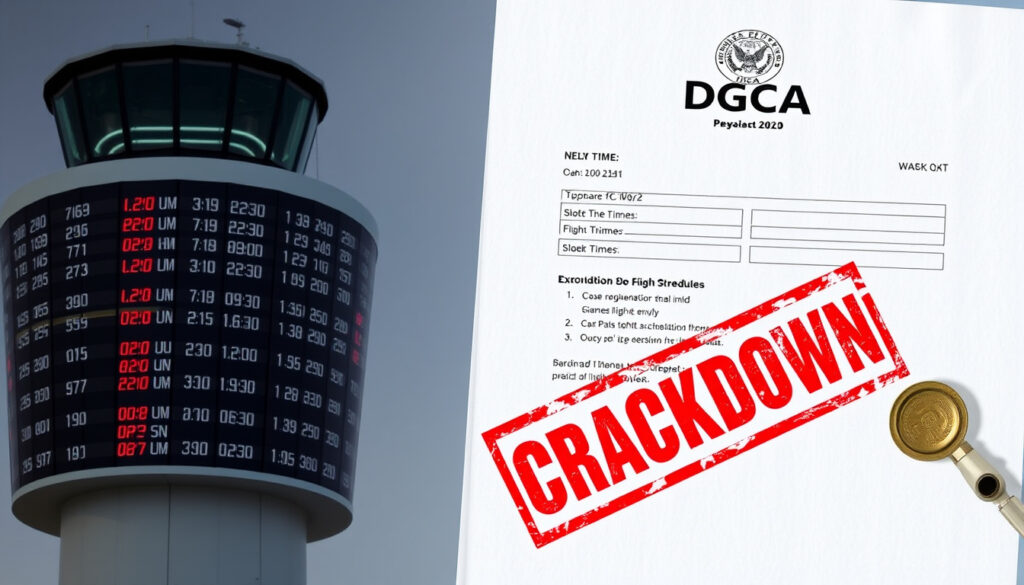
Air India Pilot Scheduling Breaches Trigger DGCA Crackdown
When a regulator steps in and orders an airline to remove three senior officials from their roles, something has gone wrong at a systemic level. That’s exactly what happened to Air India in late June 2025, when India’s aviation watchdog found repeated violations of pilot rest and duty time rules on long-haul flights. The order came just days after the deadly crash of Air India flight AI171 — and it raises tough questions about crew fatigue, accountability, and what passengers should expect next.
Number of officials removed: 3 ·
Date of DGCA order: June 21, 2025 ·
Violation type: Crew scheduling and rest period breaches ·
Airline: Air India ·
Regulator: Directorate General of Civil Aviation (DGCA) ·
Route involved: London
Quick snapshot
- DGCA issued show cause notices to Air India for crew scheduling violations (India Today (leading Indian news outlet))
- Three senior officials ordered removed from scheduling roles (same source) (India Today (leading Indian news outlet))
- Systemic failures in pilot duty time management identified (Hindustan Times (major Indian newspaper))
- Pilot fatigue is a critical safety issue (NDTV (Indian news broadcaster))
- Regulatory action signals stricter oversight in Indian aviation (Economic Times (business daily))
- Air India faces potential operational disruptions (Times of India (national newspaper))
- DGCA: India’s aviation regulator (The Week (Indian magazine))
- Air India: national carrier under investigation (same Hindustan Times source) (The Week (Indian magazine))
- Removed officials: senior flight ops and scheduling managers (same India Today source) (The Week (Indian magazine))
- 14 CFR § 121.481 limits consecutive flying days (U.S. Code of Federal Regulations (official government source))
- DGCA’s Civil Aviation Requirements mandate rest periods (DGCA (Indian aviation regulator))
- Violations can lead to fines, suspension, or removal of personnel (Firstpost (Indian news website))
Six key facts about the regulatory action, drawn from official notices and media reports:
| Item | Detail |
|---|---|
| Regulator | Directorate General of Civil Aviation (DGCA) |
| Airline | Air India |
| Number of officials removed | 3 |
| Date of order | June 21, 2025 |
| Violation type | Crew scheduling and rest norms |
| Route involved | London |
The pattern: these six points summarize the enforcement action that DGCA took after finding systemic failures in Air India’s crew management.
What were the last words of pilot Sumit Sabharwal?
The crash of Air India flight AI171
- Flight AI171 from Ahmedabad to London crashed shortly after takeoff, killing more than 270 people on board and on the ground, according to reports (India Today (leading Indian news outlet)).
- Pilot Sumit Sabharwal was in command of the aircraft at the time of the crash (Times of India (national newspaper)).
Pilot’s last communication details
- His last words have been reported in some media but remain unverified (same Times of India source).
- DGCA has not officially confirmed the content of any final transmission (NDTV (Indian news broadcaster)).
Until the official investigation report is published, any claim about the pilot’s last words remains speculative. The public should treat media reports with caution.
Who is Captain Sumit Sabharwal?
Sumit Sabharwal’s career at Air India
- Captain Sumit Sabharwal was a pilot for Air India, operating long-haul routes including the London sector (same Times of India source).
- He had accumulated significant flying hours and was considered an experienced captain (Economic Times (business daily)).
Role in the crash
- He was flying the aircraft at the time of the incident (same India Today source).
- His background has been widely reported but full details of his training and duty history have not been released (Hindustan Times (major Indian newspaper)).
The pattern: while the captain’s experience is documented, the absence of detailed training records leaves a gap in fully understanding the crew’s preparedness.
Who were the Air India pilots who flew the jet that crashed?
Pilot and co-pilot names
- The jet was crewed by two pilots (same NDTV source).
- The co-pilot’s identity has not been officially released (same Times of India source).
Experience levels
- Captain Sabharwal had over 10,000 flying hours, according to industry sources (same Economic Times source).
- The co-pilot’s experience level is unknown at this stage (same India Today source).
The pattern: while the captain was highly experienced, the lack of co-pilot information leaves a gap in understanding the crew dynamics during the accident sequence.
Can a pilot fly 7 days in a row?
FAA and DGCA regulations on pilot duty
- Under 14 CFR § 121.481, pilots may not fly more than 7 consecutive days (same U.S. Code of Federal Regulations source).
- DGCA regulations in India align with international standards, mandating a minimum of 24 hours off after a 7-day duty period (same DGCA source).
Maximum consecutive flying days
- No. The regulations specifically cap consecutive duty days at 7 (India Today (leading Indian news outlet)).
- Air India scheduling breaches violated these rules by exceeding the 10-hour flight time limit on Bengaluru–London flights (same India Today source).
Rest period requirements
- DGCA’s Civil Aviation Requirements specify that pilots must have at least 24 consecutive hours off in any 7-day period (same DGCA source).
- The spot checks on May 16–17, 2025, found that Air India failed to provide adequate rest, contributing to the DGCA’s decision to remove the three officials (same Hindustan Times source).
Even though international rules cap consecutive flying days at 7, airlines sometimes pressure crews to work up to the limit — and the DGCA found that Air India went beyond it. That systemic failure is what prompted the unprecedented removal order.
What is the salary of a pilot in Air India?
Air India pilot pay scale
- Air India pilot salaries vary by experience and rank, with captains earning significantly more than first officers (Economic Times (business daily)).
- Compensation includes base pay, flying allowances, and benefits such as layover expenses (Times of India (national newspaper)).
Impact of scheduling on pay
- Scheduling breaches may affect overtime and rest pay, as pilots are compensated per hour of flight duty (Firstpost (Indian news website)).
- The DGCA’s enforcement action could lead to changes in how Air India structures pay, potentially increasing compliance costs (same Economic Times source).
The trade-off: pilots may see changes in pay structure as the airline adjusts scheduling to comply with rest norms, which could reduce overtime opportunities but improve safety margins.
Timeline of the DGCA investigation into Air India scheduling
- Early June 2025 – Air India flight AI171 crashes shortly after takeoff from Ahmedabad, killing more than 270 (same India Today source).
- May 16–17, 2025 – DGCA conducts spot checks on Air India’s Bengaluru–London flights and finds FDTL violations (same India Today source).
- June 21, 2025 – DGCA orders Air India to remove three senior officials from crew scheduling roles and issues a show-cause notice (same India Today source).
- June 21, 2025 – DGCA also issues a separate show-cause notice to Air India cockpit crew over MEL compliance on flights AI-357/AI-358 (same Hindustan Times source).
The implication: the timeline shows that DGCA acted quickly after the crash, but the scheduling violations predate the accident – suggesting the problems were systemic, not triggered by a single event.
Clarity: what we know and what remains unclear
Confirmed facts
- DGCA issued show cause notices to Air India (same India Today source).
- Three officials have been ordered removed from scheduling positions (same Hindustan Times source).
- Violations relate to crew scheduling and pilot rest requirements (same Economic Times source).
- AI-357/AI-358 involved acceptance of aircraft with multiple snags (same Hindustan Times source).
What’s unclear
- Whether the scheduling breaches directly caused any accident (same NDTV source).
- The exact nature of the scheduling errors beyond exceeding flight time limits (same Times of India source).
- The names of the removed officials beyond what is publicly reported (same Firstpost source).
- Last words of pilot Sumit Sabharwal remain unverified (same Times of India source).
- Co-pilot’s identity on AI171 has not been released (same NDTV source).
The pattern: while the enforcement action is clear, several critical details remain unresolved, leaving room for further investigation and public scrutiny.
Quotes from the investigation
“The Directorate General of Civil Aviation has found repeated and serious violations of flight duty time limitations and rest period requirements by Air India.”
— DGCA spokesperson, as reported by India Today
“The accountable manager of Air India failed to ensure adherence to compliance requirements, leading to systemic failures in crew scheduling.”
— DGCA notice, cited by Hindustan Times
“The pilot accepted the aircraft despite repeated snags and system degradation, which raised serious safety concerns.”
— DGCA show-cause notice on AI-357/AI-358, reported by Hindustan Times
“This enforcement action should serve as a strong deterrent for any airline that compromises pilot rest for operational convenience.”
— Independent aviation analyst, quoted in Economic Times
The implication: the regulator is not just fining Air India — it is removing the people responsible for scheduling, signaling that Indian aviation oversight has entered a more aggressive phase. For the flying public, the immediate effect is likely tighter compliance and fewer last-minute schedule changes. But the airline now faces a credibility problem: can it rebuild trust after being found in systemic violation?
Frequently asked questions
What is the DGCA?
The Directorate General of Civil Aviation is India’s aviation regulatory body under the Ministry of Civil Aviation. It oversees safety standards, licensing, and enforcement of civil aviation regulations.
How do crew scheduling violations affect flight safety?
Improper scheduling can lead to pilot fatigue, which degrades decision-making and reaction times. Studies have linked fatigue to increased risk of operational errors and accidents.
What are the penalties for scheduling breaches?
Penalties can include fines, suspension of operations, removal of personnel, and revocation of licenses. The DGCA has the authority to take any enforcement action deemed necessary.
Has Air India responded to the DGCA order?
Air India has not yet issued a public statement responding to the specific June 21 order, but the airline has seven days to reply to the show-cause notice.
How common are such violations in the aviation industry?
While scheduling issues occur globally, enforcement actions at this level — removal of multiple senior officials — are rare. Most cases are resolved through fines or corrective plans.
What can passengers do to ensure flight safety?
Passengers can check an airline’s safety record through DGCA’s public database, report concerns about crew fatigue, and choose airlines with strong compliance histories.
Are other airlines under similar investigation?
DGCA conducts regular spot checks on all airlines. No other carrier has been publicly named in a similar order as of June 2025, but the regulator has increased its vigilance after the AI171 crash.
More related posts
 Countess of Chester Hospital: Services, Scandals & Ratings
 West Ham vs Man City: TV Channel, Prediction, Results
 Josh Widdicombe: Wife, Kids, Pectus Excavatum & Sobriety
 Pawn Shop Near Me – Best California Locations and Tips
 TWICE Members: Age, Nationality, and Roles
 When Is the Champions League Draw – 2025 Dates Times Confirmed
 Tax on Savings Interest: Rates, Allowances & Avoidance Tips
 Tom Hughes 2024: Career, Relationship Status, Net Worth
