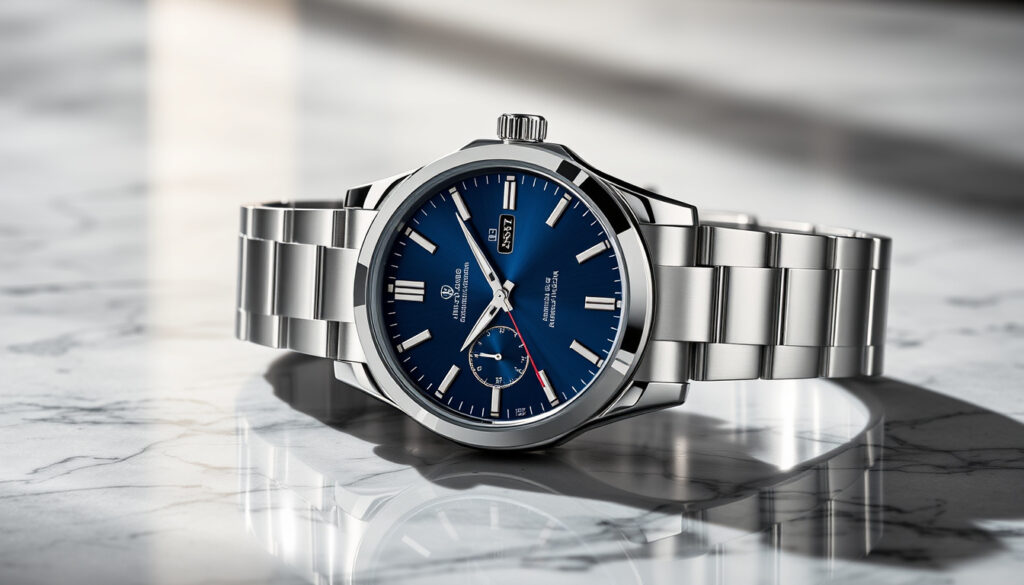
Tissot PRX Powermatic 80 – Swiss Automatic Watch Review
The Tissot PRX Powermatic 80 has earned a reputation as one of the most compelling automatic watches available for under one thousand dollars. Since its introduction, this timepiece has captured the attention of both seasoned collectors and newcomers to the world of mechanical horology. Its distinctive integrated bracelet design draws direct inspiration from the original PRX models of the late 1970s, while the Powermatic 80 movement delivers functionality that rivals watches costing significantly more.
Swiss watchmaking heritage meets modern engineering in a package that consistently earns praise from reviewers and enthusiasts alike. The combination of an 80-hour power reserve, 100-meter water resistance, and the quality finishing expected from a Swatch Group brand makes this an unusual proposition in the entry-level luxury segment.
What Is the Tissot PRX Powermatic 80?
The PRX collection traces its roots to 1978, when Tissot first introduced its integrated bracelet design that set the watch apart from conventional styles of the era. The 2021 revival brought the line back into the spotlight, with the Powermatic 80 variant arriving the following year to satisfy demand for mechanical movements within the same aesthetic package.
- Integrated bracelet design that defined the 1970s watch aesthetic
- 80-hour power reserve exceeds most competitors in this price bracket
- Available in multiple dial colors including popular blue and green variants
- Exhibition caseback reveals the decorated Powermatic 80 movement
- Super-LumiNova applied to indices and hands for low-light legibility
- Nivachron anti-magnetic hairspring provides enhanced durability
| Specification | Value |
|---|---|
| Diameter | 40mm |
| Thickness | 10.8–10.9mm |
| Lug-to-Lug | 39.5–44mm |
| Water Resistance | 100m (330ft / 10 ATM) |
| Crystal | Sapphire (front and caseback) |
| Weight | Approximately 138g |
What Is the Powermatic 80 Movement?
The Powermatic 80 caliber represents Tissot’s modified version of the well-established ETA 2824-2, produced exclusively for the Swatch Group. This movement has been substantially reengineered to deliver performance characteristics that set it apart from the standard automatic movements found in this price category. The caliber designation CO7.111 identifies this exclusive variant that cannot be found in watches outside the Swatch Group family.
Key Technical Features
Operating at a frequency of 3Hz (21,600 vibrations per hour), the movement balances energy efficiency with smooth second-hand sweep. Twenty-three jewels reduce friction throughout the gear train, contributing to long-term reliability. Accuracy specifications state performance within ±15 seconds per day, which aligns with or exceeds what most wearers experience from comparable automatics.
The Nivachron anti-magnetic hairspring represents one of the movement’s most significant technical advantages. Traditional movements can experience accuracy degradation when exposed to magnetic fields from everyday electronics and appliances. The Nivachron alloy construction provides resistance to magnetization, helping maintain consistent timekeeping over extended periods.
Practical Functions
The hacking seconds function stops the balance wheel when the crown is pulled out for time setting, enabling synchronization with a reference time source. Hand-winding capability allows the mainspring to be tensioned manually without wearing the watch, useful when the timepiece has been unworn for an extended period.
Some purists note the inclusion of plastic components in the Powermatic 80, specifically in the barrel and gear train. While this reduces material costs and weight, traditionalists may prefer all-steel constructions found in higher-priced alternatives.
Tissot PRX Powermatic 80 vs Quartz Version
The decision between the automatic and quartz variants of the PRX comes down to personal priorities. Both share the same distinctive 40mm case architecture, sapphire crystal, and waffle-pattern dial, but their movements represent fundamentally different philosophies.
Automatic Advantages
The Powermatic 80 automatic offers the mechanical experience that many collectors value. The visible sweeping motion of the second hand, the tactile connection to a self-winding mechanism, and the heritage of Swiss automatic watchmaking all contribute to its appeal. The 80-hour power reserve means the watch can be set aside for three full days without resetting, a practical advantage over standard automatics that typically require daily wearing or winding.
Quartz Considerations
The quartz PRX comes at a substantially lower retail price, typically ranging from $395 to $450. Its battery-powered movement delivers superior accuracy compared to mechanical alternatives, requiring no attention between battery changes that occur every two to five years. The slimmer case profile of the quartz version—approximately 9-10mm versus the automatic’s 10.8-10.9mm—may appeal to those who prefer a more discreet presence on the wrist.
The $200–300 price premium for the Powermatic 80 automatic reflects the added complexity of mechanical horology. For enthusiasts who appreciate automatic movements, this differential represents reasonable value given the 80-hour reserve, ETA-based caliber, and quality of the integrated bracelet.
How Much Does the Tissot PRX Powermatic 80 Cost?
Retail pricing for the Powermatic 80 with stainless steel bracelet typically falls between $675 and $725 in the United States market. European pricing converts to approximately €650–775. Variant selections, such as the rose gold PVD bezel option, command premiums starting around €690. Alternative strap materials—leather or rubber—typically reduce the total by approximately $50 compared to the steel bracelet configuration.
The 35mm variant, offering the same technical specifications in a more compact case, retails at approximately $695. Specialty materials like forged carbon bezels push pricing toward $995, while precious metal variations such as the gold bezel model reach approximately $1,850.
Street pricing frequently falls below retail, with many authorized dealers offering the watch at $700–800. Discount availability varies by region and retailer, and gray market sources may present additional savings with corresponding warranty considerations.
Is the Tissot PRX Powermatic 80 Worth Buying?
Professional reviews consistently describe the Powermatic 80 as representing exceptional value within its category. Publication statements have characterized it as a “near-perfect Swiss watch” and a “people’s watch,” emphasizing how successfully it combines retro aesthetics with contemporary engineering standards. The 1970s heritage resonates with those seeking vintage character, while the modern movement technology provides reliable daily wear capability.
Strengths Recognized by Reviewers
The integrated bracelet receives particular praise for its supple feel and comfortable fit. Despite its 40mm diameter, the watch reportedly “disappears under cuffs” due to its carefully considered case proportions. Accuracy testing confirms the movement performs within specification, with many reviewers documenting results well under the ±15 seconds per day tolerance.
Build quality extends to the sapphire crystals on both front and caseback, the applied indices with Super-LumiNova treatment, and the overall finishing of the stainless steel case. The exhibition caseback invites inspection of the decorated movement, which includes a custom rotor bearing the Tissot branding. Those interested in detailed watch reviews will find the PRX Powermatic 80 frequently discussed in horological publications.
Areas Receiving Criticism
Lume performance represents the most frequently cited limitation. While adequate for casual use, the Super-LumiNova application does not provide the extended low-light visibility that divers or outdoor enthusiasts might require. The bracelet lacks micro-adjust functionality, requiring owners to add or remove links for precise sizing rather than making on-the-fly adjustments.
The plastic components within the movement assembly concern some observers who prefer traditional all-steel constructions. However, these polymer parts serve legitimate engineering purposes and remain standard practice across the Swatch Group’s entry-level mechanical offerings.
The PRX Timeline: From 1978 to Present
Understanding the PRX lineage provides context for appreciating what the Powermatic 80 represents in the collection’s evolution.
- 1978: Original Tissot PRX launched, introducing the integrated bracelet concept that would become a design icon
- 2021: PRX revival begins with quartz movement variants, sparking renewed interest in the collection
- 2022: Powermatic 80 automatic introduced, meeting demand for mechanical options within the PRX family
- 2023 and beyond: Color variations expand to include green dials, mother-of-pearl options, and special edition treatments
What Is Confirmed and What Remains Unclear
Established Information
- 80-hour power reserve confirmed across all specifications
- Nivachron hairspring confirmed in movement specs
- 100m water resistance verified by multiple sources
- Sapphire crystal front and caseback confirmed
- Accuracy ±15 sec/day stated by manufacturer
- Hacking and hand-winding capabilities confirmed
Areas Requiring Verification
- Long-term reliability data beyond 2+ years limited
- Service interval recommendations not formally published
- Specific component sourcing subject to production variations
- Availability of authorized service centers varies by region
Market Position and Competitive Context
The Powermatic 80 occupies an unusual position in the watch market, delivering Swiss automatic credentials at a price point more commonly associated with Japanese movements. When compared against Seiko automatics in the same range, the Tissot offers superior finishing quality and the Powermatic’s extended power reserve exceeds what most comparable Japanese movements provide.
The integrated bracelet design itself places the PRX within a category traditionally reserved for higher-priced timepieces. Brands typically charge substantially more for watches featuring seamlessly integrated bracelet architectures. Tissot’s ability to deliver this aesthetic while maintaining the Powermatic 80 under the $1,000 threshold represents a significant achievement in accessible luxury watchmaking.
The Swatch Group’s manufacturing scale enables competitive pricing without the quality compromises that might be expected at this level. Every component, from the Nivachron hairspring to the butterfly clasp mechanism, reflects the engineering resources available to a major Swiss watch conglomerate.
What Reviewers Are Saying
“The PRX Powermatic 80 has emerged as the people’s watch of this generation—a Swiss automatic that delivers genuine value without requiring compromises that diminish the ownership experience.”
— Quill and Pad, June 2025
“The 80-hour power reserve changes how you interact with a watch. Setting it aside for the weekend and picking it up Monday ready to go feels like magic the first time it happens.”
— Hodinkee, Review Coverage
Final Assessment
The Tissot PRX Powermatic 80 succeeds in delivering Swiss automatic watchmaking within reach of enthusiasts who might otherwise consider Japanese alternatives or step up to pre-owned vintage pieces. Its combination of retro-inspired design, modern movement technology, and practical features like 100-meter water resistance and an 80-hour power reserve creates a compelling package at its price point. For those seeking a daily-wear automatic that performs reliably while generating compliments, this Tissot represents a thoughtful choice backed by the resources of a major Swiss manufacturer. Buyers interested in comparing this timepiece against other automotive-inspired watches may find the 2024 Land Rover Defender guide useful for context on integrated design philosophy.
Frequently Asked Questions
More related posts
 Flower of Scotland Lyrics: Meaning, History & Sports Anthem
 iPhone 12 Screen Size – Dimensions and Specs for All Models
 Best Thrillers on Netflix: IMDb & Rotten Tomatoes Top Picks
 Chitty Chitty Bang Bang – Cast, Plot, Songs and Legacy
 8 Out of 10 Cats Does Countdown – Cast, Episodes, Where to Watch
 Matt Hancock and Gina Coladangelo: Affair Timeline
 Lindsay Lohan: Downfall, Comeback, and Life Now
 Serie A Top Scorers: All-Time Records & Current Leaders
