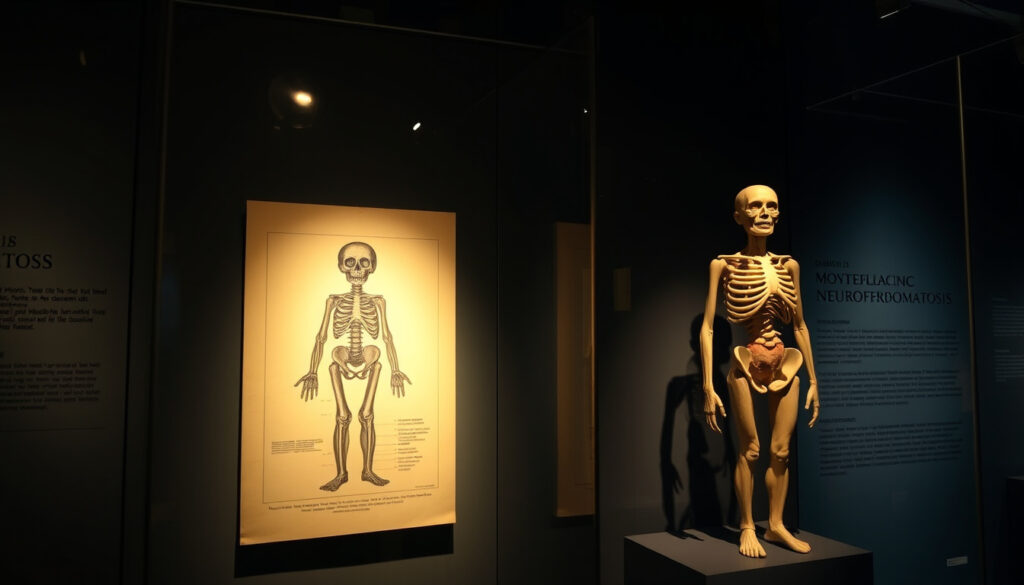
Adam Pearson: Neurofibromatosis and the Elephant Man Myth
Most of us first met Adam Pearson when he appeared on screen next to Scarlett Johansson in Under the Skin — a scene that lingered not because of the actor’s condition, but because of his presence. Pearson lives with neurofibromatosis type 1 (NF1), a genetic disorder that has shaped his face and his career, yet he has turned public curiosity into a platform for change, and in this article we follow his journey from diagnosis to the big screen and the long‑overdue correction of a century‑old myth.
Born: 6 January 1985 ·
Condition: Neurofibromatosis type 1 (NF1) ·
First film: Under the Skin (2013) ·
Upcoming film: The Elephant Man ·
Award nomination: Grierson Award 2016 (UK Documentary Presenter of the Year) ·
Advocacy: Disability rights campaigner
Here is a summary of Adam Pearson’s key biographical details.
Quick snapshot
- Adam Pearson has neurofibromatosis type 1 (People (celebrity news publication))
- Diagnosed at age 5 (BBC News)
- Twin brother Neil also has NF1 (Wikipedia)
- Exact release date of the upcoming Elephant Man film
- Details about personal relationships (wife, children)
- 2025: Cast as Joseph Merrick in new The Elephant Man film (Playbill (theatre industry publication))
- Star in a film about The Elephant Man, aiming for factual accuracy
| Full name | Adam Pearson |
| Date of birth | 6 January 1985 |
| Profession | Actor, TV presenter, campaigner |
| Known for | Under the Skin, A Different Man |
| Condition | Neurofibromatosis type 1 |
| Twin brother | Neil Pearson (also has NF1) |
What condition does Adam Pearson have?
Overview of neurofibromatosis type 1
Neurofibromatosis type 1 (NF1) is a genetic disorder that affects approximately 1 in 2,500 people worldwide, according to People. It causes benign tumours to grow on nerve endings and the skin. Adam Pearson has this condition — and it is not the same as the disorder once attributed to Joseph Merrick, the so‑called “Elephant Man.”
Symptoms and diagnosis
NF1 symptoms vary widely. Many patients develop café‑au‑lait spots, freckling in unusual places, and benign tumours (neurofibromas). Pearson’s facial tumours became noticeable by age 8, BBC News reports. Over the years he has undergone 39 surgeries to remove excess growths.
Adam Pearson’s specific case
Pearson was diagnosed at 5 after a bump on the head failed to heal. In a BBC News interview, he described the condition as “a genetic condition that causes non‑cancerous tumours along nerve endings.” His twin brother, Neil, also has NF1, which reinforces the genetic inheritance pattern.
The implication: Adam Pearson’s condition is often misunderstood, but his advocacy is changing that.
Does Adam Pearson have the same disease as the elephant man?
Two conditions, one persistent myth. The table below lays out the key differences.
| Feature | Neurofibromatosis type 1 (Adam Pearson) | Proteus syndrome (Joseph Merrick) |
|---|---|---|
| Genetic cause | Mutation in the NF1 gene on chromosome 17 | Mutation in the AKT1 gene (mosaic) |
| Prevalence | ~1 in 2,500 | Fewer than 1 in 1 million |
| Key symptom | Benign nerve sheath tumours (neurofibromas) | Disproportionate overgrowth of bones and soft tissue |
| Inheritance | Autosomal dominant (50% chance if parent has it) | Sporadic (not inherited) |
| Modern diagnosis | Clinical criteria & genetic testing | Clinical diagnosis (no single gene test) |
| Common confusion | Often wrongly called “Elephant Man disease” | The true diagnosis of Joseph Merrick (confirmed 1986) |
Joseph Merrick’s actual condition: Proteus syndrome
Joseph Merrick lived in the 19th century with severe skeletal and soft‑tissue overgrowth. For decades, textbooks claimed he had neurofibromatosis, but a 1986 re‑examination by geneticists concluded he had Proteus syndrome. Nerve Tumours UK has explicitly warned against calling NF1 “Elephant Man syndrome.”
Differences between NF1 and Proteus syndrome
Proteus syndrome is far rarer than NF1 and causes asymmetrical overgrowth of bones, whereas NF1 primarily affects nerves and skin. The two conditions share no genetic overlap.
Why the confusion persists
The confusion dates to the 1980 David Lynch film The Elephant Man, which popularised the idea that Merrick had neurofibromatosis. Adam Pearson has publicly corrected the record: “I have NF1, not what Joseph Merrick had,” he stated in a BBC News interview. The myth lingers, but Pearson’s advocacy aims to kill it.
Every time a news headline calls NF1 “Elephant Man disease,” the NF community feels the sting of mislabelling. Pearson uses his screen roles to show that his condition is not a tragedy — it is just a genetic quirk.
How did Adam Pearson get neurofibromatosis?
Genetic cause of NF1
NF1 is caused by a mutation in the NF1 gene on chromosome 17, which produces a protein called neurofibromin that helps regulate cell growth. When the gene is faulty, cells grow unchecked, leading to tumours.
Inheritance pattern: autosomal dominant
The condition follows an autosomal dominant pattern: a child has a 50% chance of inheriting the mutation if one parent carries it. About half of NF1 cases are inherited; the rest arise from a new (de novo) mutation.
Adam Pearson’s family history
Adam Pearson inherited NF1 from his mother, who also has the disorder. His twin brother, Neil, is also affected — a clear example of the dominant inheritance pattern. In an interview with People, Pearson noted that his mother “has it very mildly” while her sons have more visible tumours.
The catch: While the genetic mechanism is clear, the public often still conflates NF1 with a different disorder.
What happened with Adam Pearson?
Career breakthrough: Under the Skin
Pearson made his acting debut in 2013’s Under the Skin, directed by Jonathan Glazer and starring Scarlett Johansson. He played a disfigured man who is lured and killed — a role that drew attention precisely because of his visible difference, but one he has said felt exploitative in retrospect.
Recent role in A Different Man
In 2024, Pearson appeared in A Different Man, a film that explores identity and facial difference. The role has been praised for giving him greater agency. People covered his candid comments about how his disfigurement “opened doors” in the industry.
Upcoming film: The Elephant Man
In 2025, it was announced that Pearson will star as Joseph Merrick in a new adaptation of The Elephant Man. Playbill reported that this will be the first time a disabled actor has portrayed Merrick on screen. The production aims to correct historical inaccuracies and present a “factually grounded” story.
“I have neurofibromatosis — it’s a genetic condition that causes non‑cancerous tumours along nerve endings. The tumours are mainly on my face.”
Adam Pearson, speaking to BBC News
“The term ‘Elephant Man syndrome’ should not be linked to NF or used to describe members of the NF community.”
Nerve Tumours UK, Nerve Tumours UK on Facebook
Pearson acknowledges that his visible difference got him cast, but he wants the industry to move beyond using disability as a plot device. The upcoming Elephant Man film is his chance to flip the script.
The implication: Pearson’s roles are not just performances; they are interventions in how disability is portrayed.
How much of The Elephant Man film is true?
Historical accuracy of the 1980 film
David Lynch’s The Elephant Man (1980) is a powerful drama, but it took significant liberties with the historical record. It portrayed Merrick as a sentimental innocent and suggested his condition was neurofibromatosis — a claim later refuted.
Real story of Joseph Merrick
Merrick likely had Proteus syndrome, a rare mosaic disorder that causes overgrowth of bones and tissue. He died in 1890 at the London Hospital. Medical historians now agree that neurofibromatosis is an incorrect diagnosis.
Modern retellings and Adam Pearson’s involvement
The upcoming film starring Pearson is described as “fact‑based” and aims to present Merrick’s story without the romanticised glaze. Pearson’s involvement adds authenticity: he lives with a visible difference and understands the stigma Merrick faced.
The pattern: Each retelling forces a reckoning with how history misdiagnosed Merrick and misled the public.
Timeline
- 1985: Adam Pearson born on 6 January in Croydon, London. (Wikipedia)
- 1990: Diagnosed with NF1 at age 5. (BBC News)
- 2013: Acting debut in Under the Skin alongside Scarlett Johansson. (Wikipedia)
- 2016: Nominated for UK Documentary Presenter of the Year at the Grierson Awards. (People)
- 2024: Stars in A Different Man. Announced to star in new The Elephant Man film. (Playbill)
The timeline shows how Pearson’s condition shaped his trajectory, but his activism is now the defining arc.
What’s known and what’s unclear
Confirmed facts
- Adam Pearson has neurofibromatosis type 1 (People).
- He was diagnosed at age 5 (BBC News).
- He will star in a new film about The Elephant Man (Playbill).
What’s unclear
- Exact release date of The Elephant Man film.
- Details of his personal relationships (wife, children).
- His profession as an actor and campaigner.
Pearson’s face got him noticed, but his activism is what keeps people listening. The balance between being seen for your difference and seen for your talent is one he navigates daily.
The implication: The public knows his medical facts, but his campaigner role is still gaining recognition.
scampspeakers.co.uk, facebook.com, antieugenicsproject.org, youtube.com, reddit.com, gordonpoole.com, tiktok.com
Para una visión más detallada de su trayectoria, puedes leer sobre su carrera y activismo en español.
Frequently asked questions
Do any celebrities have neurofibromatosis?
Yes. Actor Adam Pearson is the most visible celebrity with NF1. Other famous individuals include musician Simon Fisher‑Becker and NFL player Brandon Bostick. NF1 affects people of all backgrounds.
Where does Adam Pearson live now?
Adam Pearson is based in London, UK, though he travels frequently for filming and speaking engagements.
What movies has Adam Pearson been in?
He made his debut in Under the Skin (2013) and later appeared in A Different Man (2024). He is set to star in an upcoming adaptation of The Elephant Man.
Who is Adam Pearson’s brother?
His twin brother is Neil Pearson, who also has neurofibromatosis type 1. Neil has spoken publicly about living with the condition.
Is Adam Pearson married?
Adam Pearson keeps his personal life private. There is no publicly confirmed information about a spouse or partner.
What is Adam Pearson’s height?
Adam Pearson’s exact height is not widely published, but he appears to be of average stature.
How old is Adam Pearson?
Born 6 January 1985, he is 40 years old as of 2025.
For the neurofibromatosis community and for film audiences alike, Adam Pearson’s career is a correction machine: every role debunks the “Elephant Man” label, and every interview turns a misdiagnosis into a teachable moment. The choice for the entertainment industry is clear: cast authentically and tell the truth, or keep repeating a century of error.
More related posts
 Window to the Womb – Complete Guide to 4D Baby Scans UK
 Shiloh Jolie-Pitt: Gender, Family, and Name Change Facts
 Is Mr Tumble Dead – Justin Fletcher Alive 2025
 Average Water Bill UK – 2024 Costs by Region and Savings Tips
 28 Years Later Cast: Jodie Comer, Aaron Taylor-Johnson & More
 Samara Weaving: Biography, Husband, Movies, Family Ties
 When Is the Champions League Draw – 2025 Dates Times Confirmed
 Black Mirror Season 7: Release Date, 6 Episodes, Cast & Trailer
