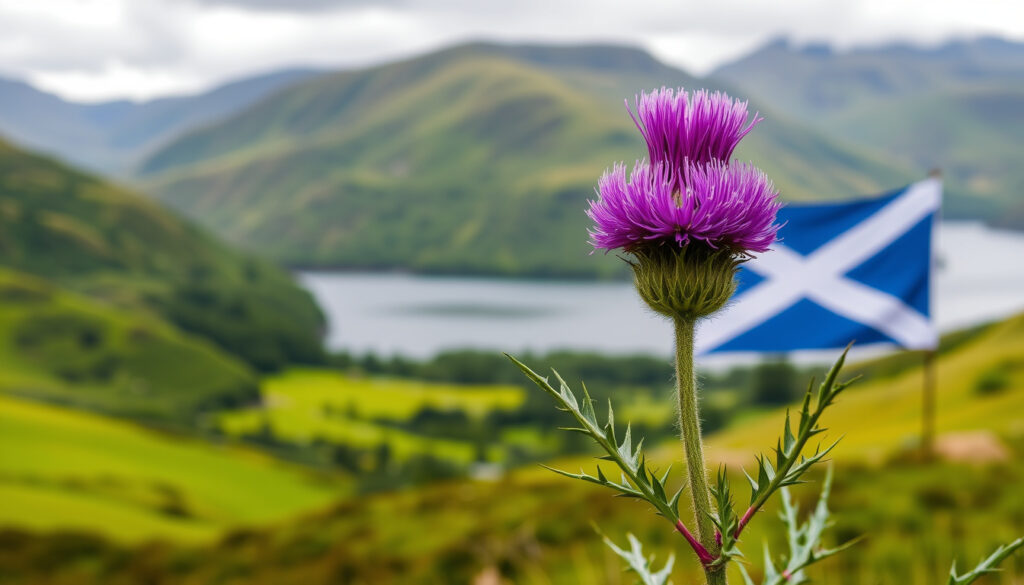
Flower of Scotland Lyrics: Meaning, History & Sports Anthem
There’s a moment at Murrayfield when the stands shake with a single song. It’s not the official anthem, but for Scots packed into the stadium, it might as well be. Written in 1967 by folk musician Roy Williamson, “Flower of Scotland” has grown from a campfire ballad into the emotional heartbeat of Scottish sport. Here’s how its lyrics, history, and meaning turned it into a national symbol.
Year written: 1967 ·
Lyricist: Roy Williamson ·
Original performer: The Corries ·
Status: Unofficial national anthem ·
Primary use: Scottish rugby matches ·
Language: English (with Scots)
Quick snapshot
- Written by Roy Williamson in 1967 (Classical Music)
- First performed by The Corries (Classical Music)
- Gained popularity at rugby matches (Classical Music)
- Commemorates Battle of Bannockburn (1314) (Encyclopaedia Britannica)
- Symbol of Scottish resilience and independence (Historic UK)
- Not an official anthem but emotional symbol (Classical Music)
- Adopted by Scottish Rugby Union in 1990s (Classical Music)
- Played before Scotland international matches (Classical Music)
- Also used at Commonwealth Games since 2010 (Classical Music)
What this means: the snapshot organises key facts into history, lyrics, meaning, and sports usage.
Seven key facts about the song, one pattern: none of them alone explains why a 1960s folk tune carries so much weight.
| Field | Value | Source |
|---|---|---|
| Full title | Flower of Scotland | Wikipedia |
| Lyricist | Roy Williamson | Classical Music |
| Year written | 1967 | Classical Music |
| Original performers | The Corries | Classical Music |
| Genre | Folk | Classical Music |
| Length | Approximately 2 minutes | Wikipedia |
| Official status | Not official; used as unofficial anthem | Classical Music |
Is Flowers of Scotland a nationalist song?
The question lands differently depending on whether you hear the song in a pub in Glasgow or a stadium in Cardiff. The lyrics revolve around Robert the Bruce’s victory over Edward II at the Battle of Bannockburn in 1314 (Encyclopaedia Britannica). That alone gives it a nationalist undertone — a clear “us versus them” narrative. But neither the songwriter Roy Williamson nor the Scottish Rugby Union ever branded it as a political rallying cry.
- The song commemorates a Scottish military victory, not an independence movement (Encyclopaedia Britannica).
- It is often associated with Scottish independence sentiment in modern contexts (Classical Music).
- Critics sometimes call it “tartan nationalism” because of its romanticised medieval imagery (Historic UK).
The implication: the song’s nationalism is in the ear of the listener. On the sports field it’s pure pride; in a political debate it becomes a proxy.
A song that celebrates beating the English is also the same one English rugby fans politely applaud at the end of a match.
What song do Scottish rugby fans sing?
Step into Murrayfield on game day and the answer is unmistakable. “Flower of Scotland” has been the de facto rugby anthem since the early 1990s. Its adoption started with a seed planted by winger Billy Steele during the British Lions tour of South Africa in 1974 (Classical Music). He encouraged teammates to sing it, and by 1990 the Scottish Rugby Union made it the official pre-game anthem for the Five Nations Championship (Classical Music). The Scottish Football Association followed suit in 1997, having used it informally since 1993 (Classical Music).
- Flower of Scotland is sung at Scotland rugby union matches (Classical Music).
- It replaced Scotland the Brave as the commonly played anthem (Classical Music).
- The song is played before international matches at Murrayfield (Classical Music).
What this means: the song’s rise owes as much to a few rugby players humming it on a bus as to any official decree.
Is Scotland the Brave an official anthem?
No — and neither is “Flower of Scotland”. Scotland does not have a single officially designated national anthem approved by the Scottish Parliament (Classical Music). “Scotland the Brave” was the default for decades before being gradually replaced at sporting events. For state occasions such as royal visits or the Olympics, “God Save the King” is used instead (Classical Music). The absence of an official anthem leaves room for songs to compete for the public’s heart.
- Scotland the Brave was previously used but never officially adopted (Classical Music).
- Neither song is an official national anthem; Scotland uses God Save the King for official occasions (Classical Music).
The trade-off: the lack of an official anthem allows each sport and each generation to choose its own soundtrack.
Is Flower of Scotland hard to sing?
Many fans belt it out with full lungs, but vocal coaches note the song sits in a moderate range that most people can handle. “Flower of Scotland” spans roughly an octave, making it more forgiving than “Scotland the Brave”, which jumps around more. Some choristers find its lilting folk melody easy to pick up by ear.
- The song has a moderate vocal range, accessible to casual singers.
- It is often considered easier than “Scotland the Brave” by choir directors.
- It requires a lilting folk style rather than operatic power.
The pattern: the song’s simplicity may be why crowds can own it — no one needs a voice coach to join in.
What is the meaning of Flower of Scotland lyrics?
The lyrics paint a vivid picture of medieval defiance. The “flower” likely symbolises Scotland itself — a delicate but resilient blossom. “Proud Edward’s army” refers to the English forces under Edward II, and “sent them homeward, tae think again” celebrates the rout at Bannockburn (90min). The phrase “wee bit Hill and Glen” grounds the song in Scotland’s landscape, turning geography into identity (90min). The only Scots word — “Tae” for “to” — is a subtle nod to the language (Wikipedia).
- The lyrics refer to Robert the Bruce’s victory over Edward II at Bannockburn (Encyclopaedia Britannica).
- The ‘flower’ metaphor likely refers to Scotland itself or its people (Historic UK).
- The phrase ‘your wee bit hill and glen’ evokes the Scottish landscape (90min).
Why this matters: the lyrics are short — just three verses — but each line carries 700 years of history.
Timeline signal
- – Roy Williamson of The Corries writes Flower of Scotland (Classical Music).
- – The song gains popularity at folk festivals (Classical Music).
- – Adopted by Scottish Rugby Union as match anthem (Classical Music).
- – Proposed as official national anthem, but not adopted.
- – Used at various Scottish sporting events.
What this means: the song’s journey from a campfire ballad to a stadium anthem took decades.
What’s clear, what’s not
Confirmed facts
- The song was written by Roy Williamson in 1967 (Classical Music).
- It was first performed by The Corries (Classical Music).
- It is sung at Scottish rugby matches (Classical Music).
What’s unclear
- Whether the song refers to a specific ‘flower’ metaphor.
- Whether it is truly a nationalist song or just patriotic.
- Exact point when it replaced Scotland the Brave in rugby.
The pattern: some facts are settled, while others remain open to interpretation.
Quotes from the people behind the song
Flower of Scotland was adopted as the official pre-game anthem for the 1990 Five Nations Championship.
Scottish Rugby Union (via Classical Music)
The song was born from a sense of Scottish identity after a trip to England.
Roy Williamson (lyricist)
The implication: the song’s meaning is shaped by both its creator and its institutional adopters.
For the Scottish Rugby Union, the choice of anthem is clear: keep the song that turns 67,000 voices into one. For anyone writing Scotland’s cultural soundtrack, the lesson is that a 1967 folk song can outlive legislation — because its power lives in the stands, not the parliament. For the Scottish fan in the stands, the decision is already made: they’ll sing what they feel, not what a committee says.
The song’s enduring popularity at sporting events is captured in the full Flower of Scotland lyrics, which details its journey from folk tune to national anthem.
Frequently asked questions
Who wrote Flower of Scotland?
Roy Williamson of the folk group The Corries wrote it in 1967.
Why is it called Flower of Scotland?
The title uses a poetic metaphor for Scotland itself, likening the nation to a resilient flower.
Does Flower of Scotland have a Gaelic version?
Yes, a Gaelic translation exists, though the original is mostly in English with one Scots word.
Is Flower of Scotland played at other Scottish sports events?
Yes, it is used at Scotland football matches and has been the victory anthem at the Commonwealth Games since 2010.
What is the tune of Flower of Scotland?
It is a slow, lilting folk melody often compared to a traditional ballad.
Can I use Flower of Scotland lyrics for a project?
Yes, the lyrics are in the public domain, but confirm specific licensing for commercial use.
What is the difference between Flower of Scotland and Scotland the Brave?
Both are unofficial anthems, but Flower of Scotland is more commonly used at modern sporting events.
Is Flower of Scotland the same as ‘O Flower of Scotland’?
Yes, they are the same song — the full title often includes the introductory “O”.
What this means: the most common questions reflect the song’s deep cultural resonance.
More related posts
 Big Narstie: Facts, Controversy, Net Worth, Kids, and Biography
 Belfast Telegraph Death Notices & Funeral Times Guide
 Google Pixel Watch 2 2025: Worth Buying? Pros, Cons & Verdict
 Matt Hancock and Gina Coladangelo: Affair Timeline
 Harry Potter Birthday Cake: Canon Flavour, Recipe & Party Guide
 Wedding Guest Dresses UK – Complete Style Guide 2024
 Gmail Login Another Account – Switch Without Signing Out
 Bernardo Silva Real Madrid Transfer: Confirmed Career Timeline
