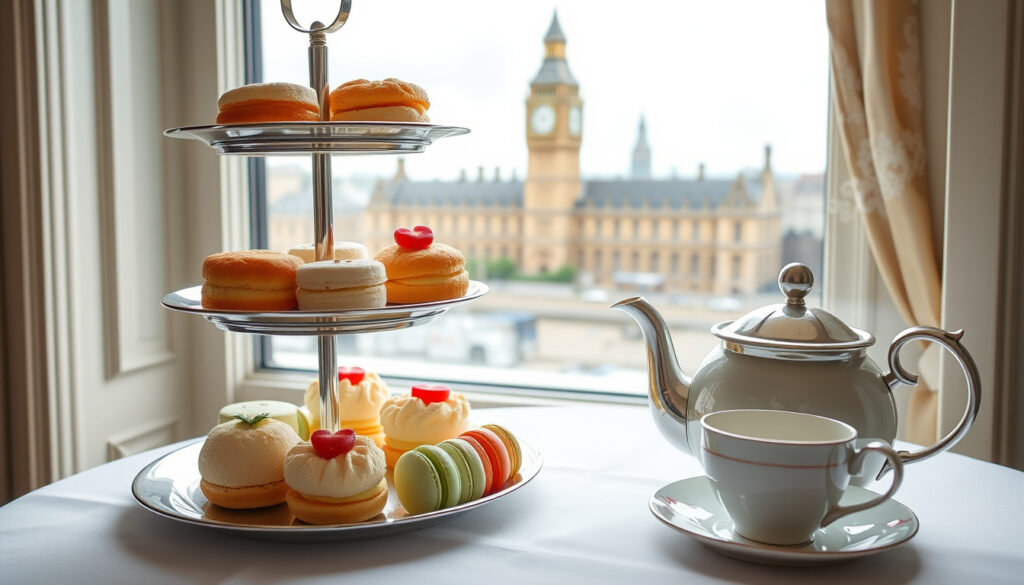
Afternoon Tea in London – Best Venues, Prices and Guide 2025
Afternoon tea in London remains one of the city’s most enduring culinary traditions, drawing visitors with its combination of finger sandwiches, scones with clotted cream and jam, delicate pastries, and carefully selected loose-leaf teas. From Mayfair grand hotels to riverside settings, the experience has evolved since the 1840s while retaining its essential character as an unhurried mid-afternoon ritual. Prices range considerably, from around £19.50 for a basic cream tea to £95 or more for premium experiences at storied establishments, making it accessible across various budgets with the right planning.
This guide covers everything needed to navigate London’s afternoon tea scene in 2025, including top venue recommendations, current pricing tiers, booking procedures, and practical details on dress codes and dietary accommodations. Whether seeking a celebratory occasion at a landmark hotel or a casual introduction to the tradition near a museum, the information below helps identify the right fit.
Where to Find the Best Afternoon Tea in London
The city’s afternoon tea venues span a wide spectrum, from historic hotels anchoring the tradition to contemporary establishments adding modern interpretations. Four categories consistently emerge as standouts for different priorities.
The Ritz
From £95 per person
Palatial Palm Court setting with live music. Full dietary menu including vegan, vegetarian, and gluten-free options mirroring the standard offering.
The Wolseley
From £19.50 per person
Classic Mayfair setting at a more accessible price point. The cream tea provides a proper introduction without the premium hotel charges.
Ampersand Hotel
From £59.50 per person
Science-themed afternoon tea designed for children. Adults from £59.50, children from £39.50, with vegetarian options available.
Rosewood London
From £80 per person
Art Afternoon Tea with themed pastries that change regularly. Available Thursday through Sunday at the Holborn property.
Luxury Venues
For those seeking the quintessential experience, The Ritz on Piccadilly sets the benchmark with its gilded Palm Court, live string quartet, and impeccable service. Adult pricing starts at £95, with children at £73, including hot chocolate for younger guests. The menu accommodates vegetarian, vegan, and gluten-free requirements without compromise, matching the standard offerings entirely.
Claridge’s in Mayfair delivers Art Deco elegance at a comparable price point of £95 per person, with the option to upgrade with champagne. The historic setting and sophisticated atmosphere make it popular for celebrations. Fortnum & Mason’s Diamond Jubilee Tea Salon on Piccadilly offers what many consider London’s oldest continuous afternoon tea service. Traditional tiers include savoury options, with vegan, dairy-free, and gluten-free alternatives from £82 per person. Extended hours and terrace seating expand the possibilities for visitors.
Mid-Range and Themed Options
Pan Pacific London near Liverpool Street provides elegant surroundings at under £75 per person, convenient for those arriving by rail. Ham Yard Hotel in Soho focuses on healthier fare with gluten-free and vegan selections from £53, serving from noon to 4:45pm. The venue suits those seeking a more contemporary atmosphere without sacrificing quality.
One Aldwych offers the Charlie and the Chocolate Factory themed experience at £70 for adults and £50 for children, combining theatrical presentation with traditional elements. Farmacy in Notting Hill concentrates on plant-based menus at £60 on weekends, while Coda at Royal Albert Hall provides innovative French-inspired vegan options at £57 per person.
Views and Special Settings
TING at the Shangri-La hotel provides panoramic city views at £78 per person, with the elevated setting enhancing the ritual. The OXO Tower offers riverside positioning at £50 per person, combining the experience with Thames vistas. Anya Cafe serves afternoon tea at £40 per person, while Rubens at the Palace near Buckingham Palace appeals to families, with halal options and generally positive guest feedback for the overall experience.
| Aspect | Details |
|---|---|
| Typical Time | 12pm to 5pm daily |
| Average Cost | £40–£80 per person |
| Duration | 1.5–2 hours |
| Dress Code | Smart casual, no sportswear |
| Booking | Essential, often 48 hours ahead |
| Courses | Three: sandwiches, scones, sweets |
Afternoon Tea Prices and Costs in London
Understanding the pricing landscape helps visitors allocate budget appropriately. London’s afternoon tea scene offers genuine variety, with quality not exclusively tied to higher price tags. Budget options frequently deliver memorable experiences without the premium charged by landmark hotels.
Not all premium-priced teas are worth the extra cost for every visitor. Budget spots like The Wolseley offer authentic elegance at a fraction of the luxury hotel price, making the experience accessible without compromise on atmosphere or quality.
Budget Tier: Under £50 Per Person
The Wolseley provides excellent value from £19.50 for cream tea up to £46.50 for the full experience. Museums offer their own versions, with the Tate Modern at approximately £30 and the British Museum at £40 per person. These venues combine cultural visits with the tea ritual. Cinnamon Bazaar serves a savoury-focused option at £27.50, emphasizing Indian-influenced bites rather than traditional pastries.
Mid-Range Tier: £50–£75 Per Person
This tier encompasses Anya Cafe at £40, Ham Yard Hotel from £53, and Farmacy from £60 on weekends. The One Aldwych Charlie and the Chocolate Factory experience costs £70 for adults and £50 for children, pricing the theatrical presentation and themed environment into the total. Coda’s vegan French-inspired menu comes in at £57 per person. These venues often provide better proximity to museums and attractions, adding convenience to the value proposition.
Luxury Tier: £75 and Above Per Person
The Ritz, Claridge’s, Fortnum & Mason, and Rosewood London form the luxury segment, with pricing from £78 to £95 or more per person. These venues typically include champagne upgrade options, live musical accompaniment, and the full grandeur of historic hotel settings. The premium justifies itself for milestone celebrations, destination occasions, or visitors prioritizing the complete ceremonial experience above all other factors.
How to Book Afternoon Tea in London
Reservation stands as an absolute requirement across all venues. Walk-in availability barely exists, particularly during peak tourist seasons. Most establishments facilitate booking through their own websites. A 48-hour advance booking window applies at venues like Farmacy, while many luxury hotels require even earlier commitment.
Cancellation policies generally permit full refunds when cancelling outside 24 hours of the reservation. Same-day cancellations or no-shows typically incur charges. Credit card details usually secure the booking. Peak periods including bank holidays, school holidays, and the winter festive season demand considerably more lead time, with some venues selling out weeks ahead.
What Time Is Afternoon Tea Served and What to Expect
The tradition centers on the afternoon window, typically spanning noon to 5pm across London’s venues. Anya Cafe serves from 2pm to 5pm, while Farmacy operates 4pm on weekends. Most establishments settle on the 2pm to 5pm range as standard, providing flexibility for visitors planning broader itineraries.
The Service Structure
Traditional afternoon tea arrives in three distinct courses presented on tiered stands. The savory course comes first, featuring finger sandwiches with classic fillings such as cucumber with cream cheese, smoked salmon, egg with cress, and ham with mustard. Scones follow on the middle tier, served warm with clotted cream and strawberry or raspberry jam. The sweet course completes the experience with pastries, cakes, and sometimes chocolate or meringue options.
Teas arrive separately, with venues offering curated selections of loose-leaf varieties. Fortnum & Mason in particular has built its reputation partly on tea expertise, with dedicated experts guiding pairings. The service pace allows for leisurely enjoyment, with most experiences spanning 90 minutes to two hours depending on venue and crowd levels.
Combining afternoon tea with nearby attractions enhances the overall visit. Fortnum & Mason sits near Piccadilly shopping, The Ritz neighbors Green Park, and Rubens at the Palace provides proximity to Buckingham Palace. Booking tea first and then planning sightseeing around the confirmed time slot works more reliably than the reverse approach.
Is Afternoon Tea Worth It?
Guest feedback consistently confirms the experience delivers genuine value, particularly at luxury venues for special occasions. Families at Rubens at the Palace have described the £70 per person cost as worthwhile for the combination of setting, service, and quality. Budget options like The Wolseley at £46.50 offer comparable satisfaction without the premium positioning.
The ritual itself provides intrinsic value beyond the food and drink. The unhurried pace, elegant surroundings, and ceremonial presentation create an experience separate from ordinary dining. Visitors prioritizing efficiency or seeking simple refreshment may find the full afternoon tea format excessive, but those embracing the tradition typically report high satisfaction with the overall occasion.
Dress Code, Kids, and Special Diets for Afternoon Tea
Understanding requirements around appearance, family suitability, and dietary accommodations prevents unpleasant surprises at the venue door and ensures the experience meets personal needs.
Dress Code Standards
Smart casual represents the universal standard across London’s afternoon tea venues. Sportswear, flip-flops, and non-tailored shorts universally violate expectations. BBC Good Food confirms venues like Rubens at the Palace and The Ritz enforce these standards strictly, turning away guests in inappropriate attire.
Luxury venues at the upper price tiers generally expect more formal presentation. Claridge’s particularly rewards dressing up for the occasion, with the Art Deco setting complementing more sophisticated attire. However, formal gowns or morning suits are not required anywhere—smart casual interpreted as neat, presentable clothing suffices even at the most prestigious addresses. Avoiding athletic wear, beach sandals, and overly casual jeans remains the key principle.
Taking Children to Afternoon Tea
Families find ample welcome across London’s afternoon tea options. The Ritz accommodates children at £73 per person with hot chocolate included, providing the full grandeur for younger guests. The Ampersand Hotel’s Science-themed afternoon tea specifically targets families, with interactive elements and smaller portions designed for children at £39.50 per child.
One Aldwych’s Charlie and the Chocolate Factory experience appeals particularly to families with younger children, combining the theatrical setting with familiar themes. Rubens at the Palace near Buckingham Palace has received positive feedback from families, with halal options and an atmosphere that welcomes children without making them feel out of place.
Venues require advance notification for most dietary requirements and children’s portions. Booking systems typically include fields for specifying vegetarian, vegan, gluten-free, or other dietary needs. Calling ahead for complex requirements ensures the kitchen can properly accommodate the request rather than providing modified versions of standard items.
Vegan, Gluten-Free, and Dietary Options
Dietary accommodation has improved substantially across London’s afternoon tea venues. The Ritz and Fortnum & Mason now offer full vegetarian, vegan, and gluten-free menus matching their standard offerings quality. Farmacy and Coda specialize in plant-based interpretations, with Coda providing French-inspired vegan options from its Royal Albert Hall location.
Ham Yard Hotel offers gluten-free and vegan options from £53 per person, while Rubens at the Palace provides halal certification alongside gluten-free selections. Standard vegetarian options remain available essentially everywhere, as the sandwich course typically includes multiple vegetarian fillings anyway. Calling ahead or noting requirements during booking remains essential for venues to properly prepare alternative selections.
The History and Origins of Afternoon Tea
The tradition traces to the 1840s, when Anna Russell, Duchess of Bedford, introduced a light mid-afternoon meal to bridge the gap between lunch at noon and dinner at 8pm. The long interval between meals created hunger in the afternoon hours, and the Duchess solved this by requesting tea, bread, and butter delivered to her quarters. The practice became habitual, and she began inviting friends to join her.
The ritual gradually expanded from its aristocratic origins into a broader social custom embraced across British society. The introduction of tiered stands—originally practical serving pieces—became associated with elegance and occasion. Wealthy households adopted the practice as a statement of refinement, while hotels formalized the experience into the structure visitors recognize today.
Fortnum & Mason claims London’s oldest continuous afternoon tea service, establishing the ritual as a commercial offering that predates many other luxury traditions. The combination of British tea culture, colonial trade networks supplying the commodity, and domestic hospitality traditions created conditions perfect for the custom’s spread.
Modern Evolution and Unique Twists
Contemporary venues have introduced themed variations while maintaining traditional elements. Rosewood London presents an Art Afternoon Tea with pastries designed around rotating artistic themes. The Ampersand Hotel offers a Science version engaging younger visitors with edible experiments. Town House Kensington alternates between Beauty and the Beast and Coco Chanel themes.
The Beaumont offers an American Gatsby interpretation, while Fortnum & Mason’s terrace provides sunset seating extending the traditional window. Coda at Royal Albert Hall combines vegan fine dining principles with afternoon tea conventions, demonstrating how the format accommodates modern dietary movements. These variations ensure the tradition remains relevant to diverse visitor priorities while preserving its essential character.
A Brief Timeline of Afternoon Tea
- 1840s: Anna Russell, Duchess of Bedford, invents the informal afternoon meal during the long interval between lunch and dinner, initially taking tea with bread and butter in private.
- 1860s–1880s: The practice spreads among aristocratic circles, evolves from private habit to social occasion, and tiered serving stands become associated with refined presentation.
- 1890s–1940s: Hotels and tea rooms formalize the experience as a commercial offering; Fortnum & Mason establishes London’s oldest continuous tea service.
- 1950s–1980s: Post-war period sees continued popularity as a special-occasion tradition; afternoon tea becomes a symbol of British hospitality for international visitors.
- 1990s–2010s: Revival of interest in traditional British experiences; themed variations emerge alongside classic offerings; dietary accommodations expand significantly.
- 2020s–Present: Afternoon tea solidifies as a tourist essential in London; luxury venues invest in elaborate presentations; budget and themed options proliferate; vegan and gluten-free menus become standard at major establishments.
What Is Clear and What Remains Uncertain
| Established Information | Information Requiring Verification |
|---|---|
| Service times typically noon to 5pm | Specific seasonal variations in hours |
| Booking essential, 48 hours recommended | Real-time availability windows |
| Smart casual dress code enforced | Exact enforcement strictness varies by venue and staff |
| Three-course structure standard | Menu contents change seasonally at most venues |
| Vegan/gluten-free options available at major venues | Complete ingredient lists on request |
| Luxury pricing from £78–£95+ | Current pricing, especially during peak seasons |
| Family-friendly venues exist | Availability of high chairs, changing facilities |
The Cultural Significance of London’s Afternoon Tea
Afternoon tea occupies a unique position in London’s cultural landscape, functioning simultaneously as culinary tradition, tourist attraction, and social ritual. The experience represents something genuinely distinctive about British hospitality—unhurried, ceremonial, and emphasizing quality over quantity. Unlike quick-service alternatives, afternoon tea demands time and attention, creating space for conversation and appreciation rather than mere consumption.
The tradition also demonstrates how British culture absorbs and adapts external influences. Tea itself arrived through global trade networks, yet the afternoon ritual emerged distinctly British, combining the beverage with local preferences for timing, presentation, and accompanying foods. Modern variations maintain this adaptive quality, incorporating vegan, gluten-free, and internationally-inspired elements while preserving the essential three-course structure and ceremonial presentation.
For visitors, the experience provides insight into values that remain important in British society—attention to detail, appreciation of craftsmanship in food and hospitality, and the continuing relevance of unhurried social occasions. The substantial investment required in both time and money signals that the tradition has retained its perceived value despite vast changes in daily life since the 1840s.
Sources and Expert Perspectives
Coverage from established food and travel publications provides the primary foundation for this guide. BBC Good Food offers regularly updated recommendations based on professional testing, while Olive Magazine provides detailed venue analysis with pricing verification. Boutique Handbook and The British Travellist Substack provide additional perspective drawing on contemporary visitor experiences.
Official venue websites—particularly those for The Ritz, Claridge’s, and Fortnum & Mason—maintain authoritative information on current offerings, though prices and availability require verification at time of booking. TripAdvisor reviews supplement formal coverage with recent guest feedback, though experiences can vary based on timing, staff, and individual preferences.
“The ritual itself provides intrinsic value beyond the food and drink. The unhurried pace, elegant surroundings, and ceremonial presentation create an experience separate from ordinary dining.”
— The British Travellist, 2025
Summary and Recommendations
Afternoon tea in London offers something genuinely distinctive—an unhurried, ceremonial experience rooted in the 1840s that continues attracting visitors seeking authentic British hospitality. The landscape spans from £19.50 cream teas at The Wolseley to £95 experiences at The Ritz and Claridge’s, with quality and atmosphere available across every price tier. Booking remains essential, typically requiring 48 hours advance notice, and smart casual attire applies universally.
Those planning visits should first determine priority—whether luxury setting, budget accessibility, family-friendliness, or dietary accommodation—then match that priority to appropriate venues from this guide. Combining afternoon tea with nearby attractions like museums, galleries, or Buckingham Palace creates efficient itineraries. Dietary requirements and children’s attendance require advance notification through booking systems.
For those curious about measuring tea quantities or other kitchen conversions, How Many Teaspoons in a Tablespoon provides practical guidance. Similarly, those dressing for occasions might find Wedding Guest Dresses UK helpful for understanding appropriate formal-casual styling principles that apply equally to afternoon tea settings.
Frequently Asked Questions
Is afternoon tea worth it in London?
Yes, particularly for first-time visitors or special occasions. Even budget options at £40–£50 per person deliver memorable experiences with quality food and elegant atmosphere. Luxury venues justify higher prices for celebrations with premium settings, live entertainment, and impeccable service.
What is the history of afternoon tea?
The tradition began in the 1840s when Anna Russell, Duchess of Bedford, created a light afternoon meal to bridge the gap between lunch and dinner. It evolved from private habit to social ritual, with hotels formalizing the three-course structure using tiered stands that became symbols of elegant presentation.
How far in advance should I book afternoon tea in London?
Most venues recommend booking 48 hours in advance as a minimum. Peak seasons, weekends, and holidays require considerably more lead time—sometimes weeks ahead. Luxury venues like The Ritz and Claridge’s often book weeks ahead for popular time slots.
Can I get vegan or gluten-free afternoon tea in London?
Yes. Major venues including The Ritz, Fortnum & Mason, and Rosewood London now offer full vegan, vegetarian, and gluten-free menus matching their standard offerings. Specialized venues like Farmacy and Coda focus specifically on plant-based interpretations. Always specify dietary requirements when booking.
What is the dress code for afternoon tea in London?
Smart casual applies universally. No sportswear, flip-flops, or non-tailored shorts. Neat, presentable clothing suffices even at luxury venues—formal gowns or morning suits are not required. Dress slightly more formally for special occasions at venues like Claridge’s.
What time is afternoon tea typically served?
Most venues serve between 12pm and 5pm, with the most common window being 2pm to 5pm. Some venues like Anya Cafe specifically serve 2pm onwards, while others operate extended hours including weekend mornings. Confirming exact times during booking remains essential.
Are children welcome at afternoon tea in London?
Yes, many venues welcome children and offer special pricing and menus. The Ampersand Hotel offers a Science-themed children’s tea, One Aldwych has Charlie and the Chocolate Factory options, and The Ritz accommodates children at reduced rates with hot chocolate included.
What should I expect at a traditional afternoon tea?
Expect three courses served on tiered stands: savory finger sandwiches first, warm scones with clotted cream and jam second, and pastries or sweets to finish. Loose-leaf tea accompanies throughout, with venues offering curated selections. The experience typically lasts 90 minutes to two hours at a relaxed pace.
More related posts
 How Many Teaspoons in a Tablespoon – US, UK and Global Standards
 Minka Kelly Movies and TV Shows: Full Filmography List
 Michael Aspel: Illness, Family, Career, and Current Life in 2025
 How to Print Screen on Windows 10 & 11: Keyboard Shortcuts
 Pound to Rupee Pakistan: Live GBP to PKR Rate Today
 One Day Car Insurance: UK & Ireland Options and Costs
 NASA Asteroid Hitting Earth – No Imminent Threats
 EasyJet Cabin Bag Size – Exact Limits, Rules and Fees
