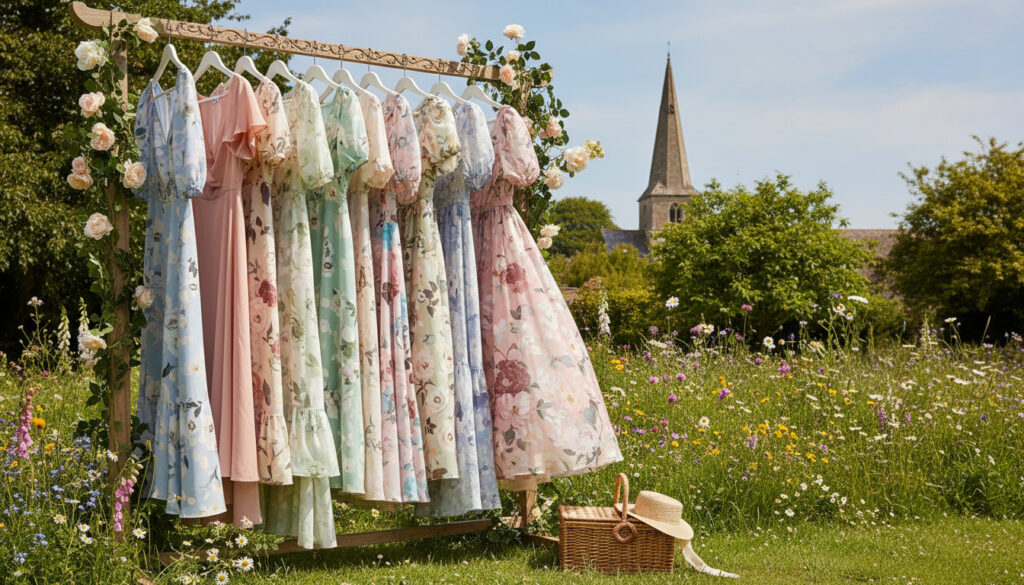
Wedding Guest Dresses UK – Complete Style Guide 2024
Navigating the dress code for a British wedding requires understanding a hierarchy that ranges from rare white-tie affairs to relaxed garden-party attire. The invitation sets the tone, yet many guests remain uncertain about the precise boundaries of wedding etiquette in the UK.
British wedding traditions carry specific expectations regarding colour, length, and formality that differ from other regions. Whether attending a castle ceremony requiring morning suits or a beach celebration calling for breathable linens, guests must balance personal style with respect for the couple’s chosen aesthetic.
This guide examines the essential dress codes, colour protocols, and shopping destinations for wedding guests across the United Kingdom in 2024 and beyond.
What Should I Wear to a Wedding in the UK?
| Formal Black Tie Full-length ball gowns or sophisticated cocktail dresses in luxurious fabrics. Black is acceptable for women. Bourton Hall guidance confirms floor-length maxis for evening. |
Daytime/Summer Pastel florals, breathable linens, knee-length or midi cuts. Hats remain customary for church ceremonies and morning suit events. |
| Evening Cocktails Midi lengths in jewel tones or refined prints. Luxe fabrics like silk and chiffon align with Debrett’s-inspired codes. |
Casual Garden Sundresses, kaftans, or relaxed maxis in beiges and soft botanical prints. No strict hemline rules, though minis remain inappropriate. |
- White tie represents the most formal tier, requiring full-length ball gowns and optional opera gloves.
- Black tie permits floor-length maxis or elegant cocktail dresses, with black explicitly acceptable for evening events.
- Morning suit events demand knee-length attire, with hats remaining customary for formal daytime weddings.
- Venue and season dictate fabric choice—light chiffon for summer gardens, heavier textures for winter ceremonies.
- The prohibition against white, cream, or pale silver remains absolute unless the invitation explicitly states otherwise.
- Daytime ceremonies generally require lighter colours and more conservative hemlines than evening receptions.
- Accessories serve as elevation tools, with sparkle appropriate for festive occasions and pearls for traditional settings.
| Dress Code | Women’s Attire | Men’s Attire | When to Wear |
|---|---|---|---|
| White Tie | Full-length ball gown, neutral/jewel tones, optional opera gloves | Black tailcoat, white waistcoat/bow tie | State/evening events |
| Black Tie | Floor-length maxi or cocktail gown, silk/chiffon/sequins | Tuxedo/bow tie (evening); dark suit (day) | Evening receptions |
| Black Tie Optional | Midi/maxi in luxe fabrics, flexible colours | Dark suit/tie; tux optional | Flexible formal |
| Morning Suit | Knee-length dress/skirt with jacket/hat | Morning coat, striped trousers, waistcoat | Traditional daytime |
| Lounge Suit/Cocktail | Knee-to-midi cocktail dress | Dark suit/tie | Semi-formal |
| Casual/Festive/Beach | Sundress, kaftan, or maxi; pastels/florals | Collared shirt, slacks | Beach/garden |
Best Wedding Guest Dresses UK 2024
Current trends favour jewel tones, opulent golds, and refined prints, marking a departure from the minimalist neutrals that dominated previous seasons. Tailored waists, ruffles, and chiffon overlays characterize the dominant silhouettes for 2024 through 2026.
High-Street Options Under £100
ASOS, Next, John Lewis, and Marks & Spencer stock appropriate midi and maxi styles between £50 and £99. Sequin minis and floral cocktails appear frequently in these ranges, though guests should prioritise fabric quality over embellishment when budgeting.
2024-2026 forecasts indicate rising demand for sustainable fabrics in wedding guest attire. Eco-conscious materials are transitioning from premium niches to standard high-street offerings, with The Wedding Edition noting texture often reads as more expensive than colour or pattern.
Summer Wedding Essentials
Pastel palettes, breathable linens, and midi lengths dominate the 2024 season. Greens and blues work year-round, while floral prints remain venue-appropriate for garden ceremonies. Breathable fabrics accommodate the UK’s unpredictable summer climate.
Where to Shop
For inclusive sizing, Monsoon offers curve-specific cuts, while ASOS and Next stock dedicated petite ranges with proportionally adjusted waistlines. John Lewis and Marks & Spencer provide extended size bands across formal collections. Those seeking versatile footwear for wedding events might also review the Ladies New Balance Trainers – Top 2024 Models and Guide for complementary casual options.
Can You Wear Black (or Other Colours) to a UK Wedding?
Evening vs Daytime Rules
Black dresses remain acceptable strictly for black-tie events and evening receptions. Monsoon guidance confirms black is inappropriate for daytime casual weddings, where it risks appearing funereal or underdressed.
White, cream, and pale silver are reserved for the bridal party unless the invitation explicitly requests otherwise. This prohibition includes ivory-accessorised outfits and extends to all dress codes from white tie to casual beach ceremonies.
Seasonal Colour Palettes
Summer 2024 trends favour pastels and botanical prints, while winter weddings accommodate jewel tones and metallics. Bourton Hall guidance suggests matching intensity to the venue’s formality, with lighter hues for church gardens and deeper tones for evening hotel receptions.
Navigating “Festive” Dress Codes
Holiday weddings permit sparkle and richer textures, though the fundamental rules regarding length and opacity remain consistent year-round. Excessive skin—including sheer panels or plunging necklines—violates conservative British traditions regardless of season.
Midi, Maxi and Style Guide for Wedding Guests
Midi Lengths for Versatility
The midi—falling between knee and ankle—serves as the safest default for unspecified dress codes. ELLE UK fashion editors confirm this length transitions appropriately from church ceremonies to evening receptions without requiring a change.
Avoid cut-outs, excessive slits, or sheer panels for traditional UK weddings. Conservative silhouettes project sophistication more effectively than revealing trends, regardless of body type or dress size.
Maxi Dresses for Formal Settings
Floor-length gowns remain mandatory for white-tie events and preferred for black-tie affairs. Chiffon and silk maxis with tailored waists align with 2024-2026 trends toward refined elegance.
Petite and Plus Size Solutions
ASOS and Next provide dedicated petite sections, while Monsoon, John Lewis, and Marks & Spencer stock plus-size formal wear up to size 28-32 in select lines. For those navigating complex UK regulations alongside wedding preparations, the UK ILR New Rules for Skilled Worker Visa – 10-Year Route and Requirements provides relevant administrative guidance.
Wedding Dress Trends Timeline (2020-2025)
- 2020–2021: Post-pandemic casualisation saw guests favouring relaxed silhouettes and comfort-focused fabrics as ceremonies downsized.
- 2022: A return to formality emerged, with renewed appreciation for traditional codes and investment dressing.
- 2023: Sustainable materials gained mainstream traction, with guests prioritising rental services and eco-conscious fabrics.
- 2024: Current trends favour jewel tones, opulent golds, and refined prints, moving away from minimalist neutrals toward statement elegance.
- 2025 (Projected): Industry forecasts indicate bold botanical prints and advanced eco-materials will dominate, alongside themed attire for destination weddings.
Wedding Dress Code Clarity
| Established Protocols | Variable Factors |
|---|---|
| White, cream, and pale silver are reserved for the bridal party | Exact hemline definitions for “cocktail” attire vary by region and venue |
| Black is appropriate for black-tie and evening events only | Hat requirements differ significantly between churches and civil venues |
| Venue formality dictates dress code hierarchy | Interpretation of “lounge suit” for women remains inconsistent |
| Daytime events require lighter colours and conservative cuts | Acceptable levels of sparkle for “festive” casual weddings lack standardisation |
Further guidance on navigating ambiguous dress codes appears in wedding guest etiquette resources.
UK Wedding Guest Style Context
British wedding etiquette has evolved from rigid Victorian standards toward more flexible interpretations, yet certain foundations persist. The morning suit remains a distinctly British daytime tradition rarely seen in other regions, while the prohibition against white has strengthened rather than relaxed over recent decades.
Seasonal considerations weigh heavily in the UK climate. Summer weddings demand breathable linens and chiffons that accommodate unpredictable weather, while winter ceremonies allow for velvet and heavier silks. The timing of the ceremony—specifically whether it occurs before or after 5pm—often determines the appropriateness of black-tie attire more definitively than in American or European traditions.
Sustainability has emerged as a significant factor in 2024 purchasing decisions. Guests increasingly seek versatile midi dresses suitable for multiple events, or utilise rental platforms for white-tie gowns that see single-use wear. This shift reflects broader environmental consciousness within the British fashion retail sector.
Expert Advice
“Match your outfit to the invitation’s tone, and never hesitate to query the couple if the theme seems ambiguous. When in doubt, neutrals without statement patterns serve safest.”
— Debrett’s Etiquette Guidance (via The Diamond Store)
“Conservatism defines white-tie events, while formal and cocktail codes allow personal expression through colour. Avoid anything that distracts from the couple—this means no minis, sheer panels, or plunging necklines at traditional British venues.”
— Fashion Editors, ELLE UK
“Neutrals work universally, but avoid statement pieces that compete for attention. The goal is polished celebration, not personal fashion statements.”
— Gabrielle Hurwitz, Stylist (via Wedding Edition)
What’s Next for Wedding Guest Fashion
Forecasts for 2025 suggest a departure from understated minimalism toward bold botanical prints and rich textural contrasts. Eco-conscious materials will likely become standard rather than premium options across high-street retailers. Themed weddings—particularly 1920s flapper styles and Texan boot-inspired western themes—are anticipated to influence guest attire selections more frequently, requiring versatile wardrobe investments that accommodate specific aesthetic requests while maintaining traditional respect for the ceremony.
Frequently Asked Questions
Can I wear a hat to an evening wedding?
Hats are traditionally reserved for daytime ceremonies, particularly those involving morning suits or church services. Evening receptions generally do not require headwear unless specified on the invitation.
Are jeans ever acceptable for wedding guests?
Jeans remain inappropriate for all but the most explicitly casual “rustic” or farm weddings. Even then, dark denim with a blazer represents the minimum standard; standard blue jeans violate British wedding etiquette.
What should I wear to a winter wedding?
Winter weddings accommodate heavier fabrics like velvet and wool blends. Jewel tones—emerald, burgundy, sapphire—replace summer pastels. Closed-toe shoes and wraps are practical necessities for UK winter weather.
Can I wear the same dress to multiple weddings?
Wearing the same dress to multiple weddings is perfectly acceptable, provided the events involve different guest groups. Consider altering accessories or jackets to refresh the appearance between ceremonies.
How do I dress for a themed wedding?
Themed weddings require balancing the requested aesthetic—1920s flapper, Texan boots, or vintage styles—with underlying dress code rules. Always confirm with the couple whether traditional formality expectations remain in place alongside the theme.
More related posts
 Amybeth McNulty: Parents, Hair, Anne with an E & Stranger Things
 Cape Verdean Ethnicity, Identity, and Travel Guide
 Michael J Fox Illness – Parkinson’s Diagnosis and Life Updates
 Are Chest Infections Contagious? Symptoms, Spread & Treatment
 Ladies New Balance Trainers – Top 2024 Models and Guide
 Josh Finan Movies and TV Shows: Complete Filmography
 Ella Maisy Purvis: Biography, Career & Neurodiversity
 Argo Blockchain Share Price: Why It’s Low and Outlook
