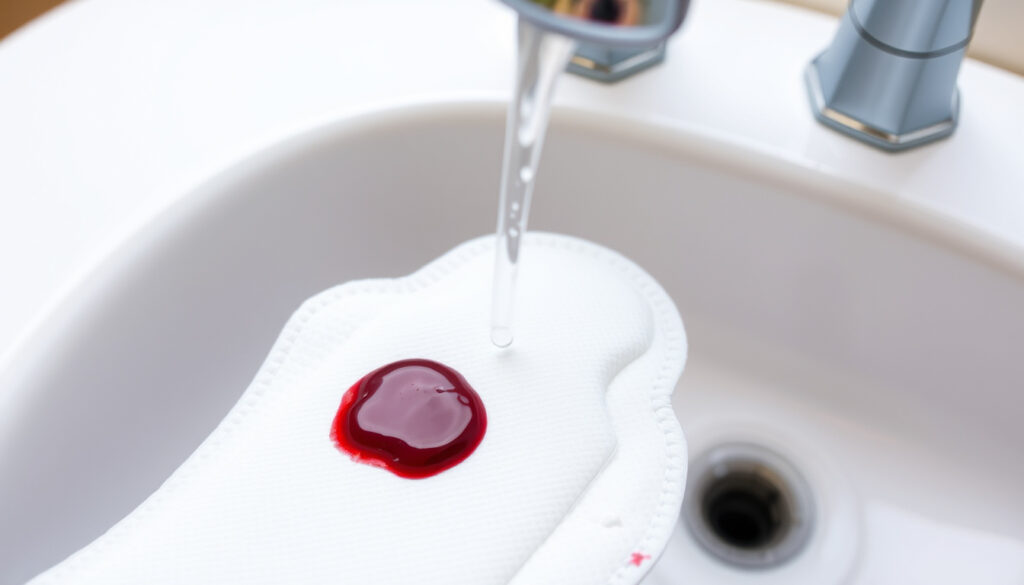
Blood Clot in Period: What’ Normal and When to Worry
You glance at the toilet paper and spot a dark, jelly-like clot—and your mind jumps straight to “Is this normal?” Period blood clots happen to about 7 in 10 menstruating people, and in most cases they’re harmless.
Normal clot size: Less than 2.5 cm (about the size of a 50-cent coin) · Heavy period definition: Changing sanitary protection every 1–2 hours · Blood loss in a heavy period: More than 80 ml per cycle · Clots are common: Up to 70% of menstruating people experience occasional clots
Quick snapshot
- Clots smaller than 2.5 cm are considered normal (NHS)
- Frequent large clots indicate heavy menstrual bleeding (Healthline)
- Fibroids and endometriosis are common underlying causes (Dr. Seckin)
- Whether jelly-like clots have a single specific cause (Dr. Seckin)
- The exact link between period clots and fertility – depends on underlying condition (Flo)
- Effectiveness of natural remedies like dietary changes – limited evidence (Cleveland Clinic)
- Clots that persist cycle after cycle warrant investigation (Flo)
- Sudden change in clot size or frequency is a red flag (Mayo Clinic)
- Track clot size and frequency over 2-3 cycles (NHS)
- See a GP if clots are larger than 2.5 cm regularly (NHS)
- Request an ultrasound if fibroids or endometriosis are suspected (Cleveland Clinic)
The table below contrasts normal and abnormal symptoms to help you assess your situation.
| Category | Normal | Needs attention |
|---|---|---|
| Clot size | < 2.5 cm (≈ 50-cent coin) | ≥ 2.5 cm or larger than a quarter |
| Frequency | Occasional, mainly on heavy days | Every cycle or most periods |
| Duration of bleeding | 3–7 days | More than 7 days |
| Pain level | Mild to moderate cramps | Severe pain that disrupts daily life |
| Sanitary pad change | Every 4–6 hours | Every 1–2 hours or more often |
What can big blood clots mean on your period?
What size is considered a large clot?
Size is the single most useful measure. The UK’s National Health Service (NHS) defines a heavy period indicator as passing blood clots larger than about 2.5 cm, roughly the size of a 10p coin or a US quarter. Health information publisher Healthline puts the threshold at “larger than a quarter” occurring regularly. Anything much beyond that—golf-ball size or bigger—is worth a conversation with your doctor, according to neurology and health resource Samphire Neuro.
2.5 cm isn’t an arbitrary number. It’s the size where the body’s natural anticlotting mechanisms start to fail, meaning blood pools and coagulates before your body can break it down. Below that, your system is working as designed.
Are large clots always a sign of something serious?
No. Passing a large clot once in a while—especially on your heaviest day—can be perfectly normal. Period tracking app and health resource Flo notes that “occasional large clots without pain can still be normal if infrequent.” The concern arrives when large clots become a pattern: every cycle, or accompanied by soaking through a pad or tampon every hour. Underlying causes can include hormonal imbalance (estrogen dominance), uterine fibroids, endometriosis, or adenomyosis, all of which a GP can investigate.
The pattern: Size plus frequency tells the story. A single 3 cm clot on day two with no other symptoms is likely fine. The same clot appearing every cycle, with heavy flow, points toward menorrhagia—clinical heavy menstrual bleeding.
Why do I pass a lot of clots on my period?
How many clots is too many?
There is no universally agreed “clot count” that triggers a diagnosis, but the NHS and Healthline agree on a functional threshold: if you are changing your pad or tampon every 1 to 2 hours for several hours, or your period lasts longer than seven days, you are experiencing heavy menstrual bleeding. Heavy periods—medically called menorrhagia—are the most common reason for passing many clots. The blood simply flows too fast for the body’s natural anticoagulants to keep it liquid.
The American College of Obstetricians and Gynecologists (ACOG) defines heavy menstrual bleeding as blood loss of more than 80 mL per cycle. To put that in context: a fully saturated regular pad holds about 5 mL, so soaking through more than 16 pads in a cycle qualifies.
Can birth control cause more clots?
It depends on the method. Intrauterine devices (IUDs)—especially the copper IUD (non-hormonal)—are known to increase menstrual flow and clot formation in some users. The NHS lists IUDs as a potential cause of heavier periods. Hormonal birth control (the pill, patch, or hormonal IUD) usually reduces flow and clot frequency, though some individuals experience breakthrough bleeding that can look like clotting. Endometriosis specialist Dr. Tamer Seckin also points out that conditions like polycystic ovary syndrome (PCOS) or thyroid disorders can alter clotting patterns through hormonal disruption.
For someone with naturally heavy periods, a copper IUD may push clotting into the concerning range. Tracking clot size before and after insertion gives you a clear data point—if the average clot size jumps from 1 cm to 3 cm, the IUD might be the trigger.
What does an unhealthy period clot look like?
What are jelly-like blood clots?
Jelly-like clots are essentially a mix of blood and cervical mucus. They are common and can be normal, but context matters. According to endometriosis specialist Dr. Tamer Seckin, “jelly-like clots that are larger than a quarter and appear frequently may suggest fibroids.” Fibroids can alter the uterine lining’s shedding pattern, producing stringy, gelatinous clots rather than compact ones. The texture alone is not a red flag—size and frequency again determine the concern level.
The catch: Visual description alone is not diagnostic. The same clot can look “jelly-like” to one person and “tissue-like” to another. Keep the focus on measurable signs—size, frequency, and accompanying symptoms.
What does a tissue-like clot mean?
Tissue-like clots—those with a grayish, fleshy, or organized appearance—require more attention. Healthline advises immediate medical help if clots are passed and pregnancy is possible, because this could indicate a miscarriage. Ireland’s Health Service Executive (HSE) similarly flags “tissue that looks gray or pink” as a possible sign of retained pregnancy tissue or a miscarriage. In a non-pregnancy context, tissue-like clots can sometimes indicate a shed endometrial cast (the entire uterine lining coming out at once), which is benign but alarming.
When should I worry about blood clots?
What are 5 signs of blood clot forming?
- Clots larger than 2.5 cm (quarter-sized or bigger) appearing regularly
- Soaking through a pad or tampon every hour for several consecutive hours
- Bleeding that lasts more than 7 days
- Severe cramping or lower back pain that over-the-counter pain relief does not touch
- Signs of anemia: fatigue, dizziness, shortness of breath, or pale skin
Cleveland Clinic (a leading US academic medical center) adds that clots accompanied by fever or pelvic pain that worsens over time should be evaluated promptly. Period tracking app and health resource Flo also flags dizziness and fatigue as indicators that blood loss may be high enough to drop iron stores.
When to see a doctor for period clots?
The NHS is direct: see a GP if heavy periods are affecting your quality of life, have lasted a long time, or are associated with severe pain. Mayo Clinic (a US nonprofit medical practice) recommends an evaluation if you are passing clots larger than a quarter and changing your pad every hour. There is no need to wait for an emergency—a simple discussion with a GP can rule out the most common causes and, if needed, lead to an ultrasound or blood test for anemia.
If you could be pregnant and you pass large, tissue-like clots, do not wait for a GP appointment—seek same-day care. Miscarriage can present as heavy clotting, and early assessment matters for both physical and emotional health.
The implication: The threshold for “worry” is not about fear—it is about functional impact. If clots and heavy bleeding keep you from work, exercise, or sleep, that alone is reason enough to get checked, regardless of whether the size hits exactly 2.5 cm.
Do period clots mean I am infertile?
Can endometriosis cause infertility?
Occasional clots, even large ones, do not indicate infertility on their own. The concern arises when clots are a symptom of an underlying condition that can affect fertility. Endometriosis—where uterine-like tissue grows outside the uterus—is linked to both heavy clotting and reduced fertility. According to endometriosis specialist Dr. Tamer Seckin, endometriosis can cause inflammation and scarring that interferes with egg release, fertilization, or implantation. However, many people with endometriosis conceive naturally or with support. Heavy bleeding and large clots alone are not a fertility verdict.
Do fibroids affect fertility?
Uterine fibroids—noncancerous growths in the uterine wall—can also contribute to heavy clotting and, depending on their location and size, may interfere with implantation or pregnancy. The American College of Obstetricians and Gynecologists (ACOG) notes that submucosal fibroids (those bulging into the uterine cavity) have the strongest link to reduced fertility. But again, fibroids are common, and most people with fibroids do not experience fertility problems.
If you are trying to conceive and regularly pass large clots, a fertility evaluation that includes an ultrasound and hormonal assessment is a reasonable step—not because the clots themselves cause infertility, but because they may point to conditions worth investigating.
The bottom line: Clots are a clue, not a diagnosis. The fertility question is really about what is driving the clotting. For a person actively trying to conceive, large clots plus heavy bleeding warrant a conversation—but most people with occasional clots have no fertility issues at all.
Related reading: Discharge in Early Pregnancy: What’s Normal and What’s Not
samphireneuro.com, womenshealthne.com, advancedgynecology.com, theblood.io
Frequently asked questions
Can birth control pills reduce blood clots during period?
Yes. Combination birth control pills (estrogen and progestin) typically lighten menstrual flow and reduce clotting. Progestin-only methods can also help, though some individuals experience breakthrough bleeding. The effect varies by person and pill type.
Is it normal to have blood clots after giving birth?
Yes, for the first few weeks postpartum. These are called lochia and include blood, mucus, and uterine tissue. Clots larger than a golf ball or soaking a pad in under an hour warrant medical attention, as they may indicate retained placental tissue or postpartum hemorrhage.
How long do period blood clots last?
Clots typically appear on the heaviest 1–2 days of your period and resolve as flow slows. If clots persist for more than 3 days or continue into the tail end of your cycle, it is worth discussing with a GP.
Can dehydration cause larger blood clots in period?
There is limited direct evidence linking dehydration to clot size. However, dehydration can concentrate blood and potentially alter flow characteristics. Staying well hydrated supports overall circulatory health but is not a proven treatment for heavy clotting.
What is the difference between period clots and miscarriage clots?
Miscarriage clots are often accompanied by tissue that appears grayish or pink and may be larger and more organized than typical period clots. Severe cramping and a positive pregnancy test are key distinguishing factors. If pregnancy is possible, any tissue-like clot should be evaluated promptly.
Does exercise affect menstrual clotting?
Regular moderate exercise may help regulate hormones and reduce heavy bleeding for some people, potentially decreasing clot formation. Intense exercise, especially in the context of low body fat, can disrupt cycles altogether. The effect is indirect and varies by individual.
Are blood clots in period more common as you age?
Yes. As people approach perimenopause (typically late 30s to early 50s), hormonal fluctuations can lead to heavier, more unpredictable periods with more clotting. Fibroids and endometriosis also become more prevalent with age, contributing to the increase.
Period blood clots are a normal part of your menstrual cycle. But when you notice any changes to the size and amount, it could point to an underlying condition.
Cleveland Clinic (health.clevelandclinic.org) — a leading US academic medical center
You may have heavy periods if you have to change your sanitary products every hour or 2; pass blood clots larger than 2.5 cm.
Ireland’s Health Service Executive (HSE) — www2.hse.ie
Related reading: Discharge in Early Pregnancy: What’s Normal and What’s Not
More related posts
 Are Trains Running Today – Live Status Check Guide
 I Know What You Did Last Summer 2025: Sequel or Remake
 Party Invitation Tips: Write & Design Yours
 Goldilocks and the Three Bears: Story, Moral & Origins
 Yours Faithfully or Sincerely: Rules for Formal Letters
 Discharge in Early Pregnancy: What’s Normal and What’s Not
 Roald Dahl Book Guide: Famous, Darkest, and Age Picks
 Lacey Chabert: Hallmark Controversy, Biography, Family & FAQs
