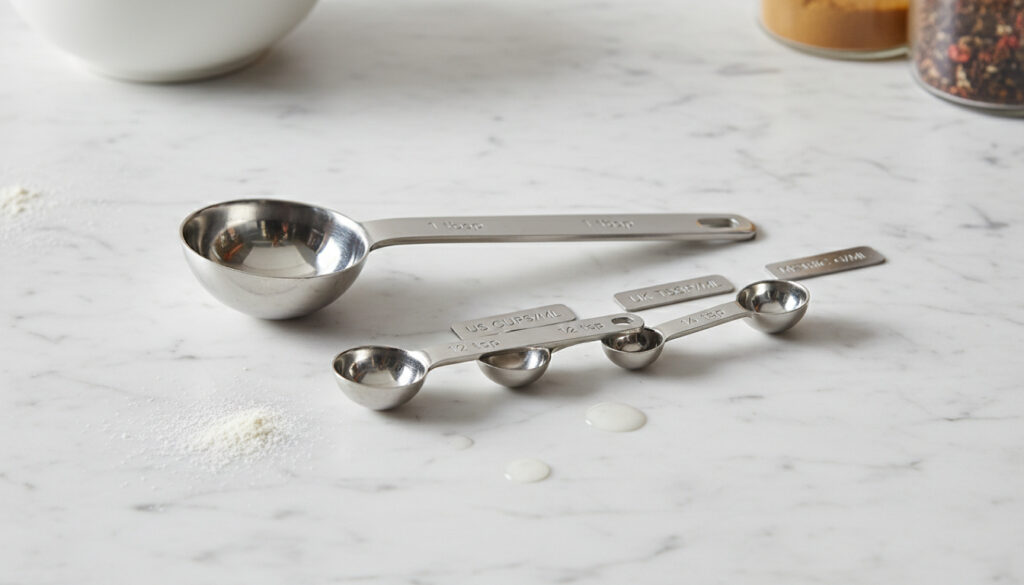
How Many Teaspoons in a Tablespoon – US, UK and Global Standards
The fundamental conversion of three teaspoons per tablespoon serves as the backbone of culinary measurement accuracy. This 3:1 ratio represents the standard across most North American recipes and nutritional guidelines, yet international variations complicate this seemingly simple arithmetic. Understanding these distinctions prevents the scaling errors that ruin delicate baked goods or over-salt savory dishes.
While the United States maintains a precise 14.7868 milliliter tablespoon derived from nineteenth-century standardization efforts, other regions adopted divergent metrics. The United Kingdom transitioned to a 15-milliliter metric tablespoon during the 1960s, while retaining legacy imperial measurements at approximately 17.76 milliliters. Australia established a unique 20-milliliter standard, creating a four-teaspoon tablespoon that confounds unwary cooks using international recipes.
Beyond volume conversions, successful cooking requires understanding weight equivalents and proper leveling techniques. Professional kitchens rely on digital scales for precision, recognizing that a tablespoon of butter differs significantly in mass from a tablespoon of flour, and that humidity affects density in dry ingredients.
How Many Teaspoons in a Tablespoon?
1 tablespoon equals exactly 3 teaspoons (14.79 ml)
15 ml tablespoon divided into 3 teaspoons of 5 ml each
Measuring oils, spices, baking powder, and liquid seasonings
tbsp or T (tablespoon); tsp or t (teaspoon)
- The FDA and USDA codify the 3:1 ratio in nutrition labeling standards
- Level measurements provide consistency; heaped spoons vary by 20-30% in volume
- US tablespoons contain precisely 14.7868 milliliters
- Metric tablespoons round to 15 milliliters for practical kitchen use
- Australian tablespoons hold 4 teaspoons (20 ml), violating the standard 3:1 assumption
- Historical British imperial tablespoons approached 4.8 teaspoons (17.76 ml)
| Measurement System | Tablespoon Volume | Teaspoons per Tbsp | Teaspoon Volume | Fluid Ounces |
|---|---|---|---|---|
| US Customary | 14.7868 ml | 3 | 4.9289 ml | 0.5 fl oz |
| UK Imperial | 17.7582 ml | ~4 (3.55 metric) | 4.4395 ml | 0.625 fl oz |
| UK Metric | 15 ml | 3 | 5 ml | ~0.507 fl oz |
| Australian | 20 ml | 4 | 5 ml | ~0.676 fl oz |
| Metric (General) | 15 ml | 3 | 5 ml | ~0.507 fl oz |
| US Teaspoon Only | — | — | 4.9289 ml | 0.1667 fl oz (1/6) |
How Do International Measurement Standards Differ?
Culinary precision demands awareness of regional measurement disparities. While North American cooks rely on the 14.79-milliliter standard, recipes originating from the Commonwealth often utilize larger tablespoon volumes that can derail recipe chemistry when substituted without conversion.
US Customary System
The United States maintains the 1893 Mendenhall Order standard, fixing the tablespoon at exactly one-half fluid ounce or 14.7868 milliliters. The National Institute of Standards and Technology (NIST) Handbook 44 preserves this definition, ensuring that three teaspoons at 4.9289 milliliters each compose one tablespoon. This standardization emerged from post-industrial efforts to align customary units with metric equivalents for scientific consistency.
Metric and UK Imperial Variations
The United Kingdom presents particular complexity. The 1960s Weights and Measures Act established the modern UK metric tablespoon at 15 milliliters, matching three 5-milliliter teaspoons. However, legacy imperial measurements persist in older cookbooks, where tablespoons held approximately 17.76 milliliters—nearly 20% larger than their US counterparts. Converting between these systems requires scaling ingredient volumes by precise ratios to maintain recipe integrity.
Australian Standards
Australia diverged from both US and UK norms by establishing a 20-milliliter tablespoon containing four 5-milliliter teaspoons. This standard, documented by culinary measurement references, means Australian recipes require 33% more volume per tablespoon than US equivalents. Cooks working with Australian-published materials must reduce measurements by one teaspoon per tablespoon called for to approximate US standards, or risk over-seasoning and textural failures.
Always examine the publication location of recipes. A UK tablespoon provides approximately 20% more volume than its US counterpart, while Australian tablespoons exceed US volumes by 33%. Checking measurement standards before beginning prevents irreversible scaling errors in baking.
What Are the Weight Equivalents for Baking?
Volume measurements introduce variability that weight-based cooking eliminates. Ingredient density fluctuates with humidity, packing pressure, and temperature, making tablespoons and teaspoons imprecise tools for baking chemistry where ratios determine success.
Converting Volume to Weight
Butter presents the most consistent conversion: one US tablespoon weighs approximately 14 grams, while a UK tablespoon weighs roughly 17 grams due to volume differences. All-purpose flour varies significantly—one sifted US tablespoon equals approximately 8 grams, while unsifted or packed flour reaches 9 grams. Professional baking guidelines recommend weighing flour at 120-140 grams per cup, rendering tablespoons secondary to scales for precision.
Avoiding Common Measurement Errors
The “spoon and level” technique proves essential for dry ingredients. Scooping directly from containers compacts flour, increasing density by up to 20%. Liquid ingredients require flat-bottomed measuring spoons viewed at eye level to prevent meniscus errors. Conversion charts provide starting points, but environmental factors necessitate weighing for reproducible results.
How Did Modern Measurement Standards Emerge?
Contemporary kitchen measurements represent centuries of metrological evolution, from variable household spoons to internationally standardized units. Understanding this history illuminates why discrepancies persist between national standards.
Pre-Standardization Era
Prior to the twentieth century, spoons served as personal utensils rather than calibrated tools. Blacksmiths and silversmiths produced spoons of varying capacities, with “tablespoons” defined by household tradition rather than universal standard. Historical culinary records indicate variations of 30-50% between regional tablespoon sizes, rendering old recipes challenging to reproduce accurately.
The Mendenhall Order and NIST Standards
The 1893 Mendenhall Order fundamentally restructured US weights and measures by defining customary units in terms of metric equivalents. This directive fixed the US fluid ounce at 29.5735 milliliters, automatically establishing the tablespoon at 14.7868 milliliters and the teaspoon at 4.9289 milliliters. NIST Handbook 44 maintains these definitions today, providing the legal foundation for FDA and USDA labeling requirements.
Modern Metric Alignment
Global trade necessitated metric compatibility. The FDA permits 15-milliliter rounding for nutrition labels to align with international standards, though the precise 14.7868 milliliter standard remains mandatory for commercial measurement devices. This dual approach creates minor discrepancies between laboratory-precise baking and home cooking approximations.
Substituting UK imperial tablespoons (17.76 ml) for US tablespoons (14.79 ml) increases ingredient volume by 20%. In chemically sensitive baking—particularly involving leavening agents or salt—this error produces dense textures, excessive saltiness, or failed rises.
One US tablespoon of butter weighs approximately 14 grams, while a UK tablespoon weighs roughly 17 grams. For pastry recipes requiring precise fat ratios, weighing butter eliminates volume confusion entirely, regardless of tablespoon origin.
Historical Development of Measurement Standards
- : Variable spoon sizes based on regional blacksmithing and household silver traditions, with no universal capacity standards.
- : The Mendenhall Order standardized US customary units against metric equivalents, fixing the tablespoon at 0.5 fluid ounces (14.7868 ml).
- : The UK Weights and Measures Act transitioned British standards to metric, establishing the 15-milliliter tablespoon while phasing out the 17.76-milliliter imperial version.
- : FDA and USDA maintain the 14.7868 ml standard for regulatory purposes, while permitting 15 ml rounding for consumer nutrition labeling.
Verified Standards and Regional Variations
Established Facts
- US tablespoon equals exactly 3 teaspoons (14.7868 ml)
- Metric tablespoon equals 15 ml (3 × 5 ml teaspoons)
- FDA/USDA codification via NIST Handbook 44
- Australian tablespoon equals 4 teaspoons (20 ml)
- US teaspoon equals 1/6 fluid ounce precisely
Variable or Uncertain
- Exact teaspoon equivalents for UK imperial (ranges 3.55 to 4.0)
- Precise historical transition dates for household utensils
- Weight conversions for humid vs. arid climates
- Commercial tablespoon manufacturing tolerances
- Pre-1893 regional variation documentation
Why Precise Spoon Measurements Matter in Cooking
Chemical leavening agents—baking powder and soda—demand precise ratios to acids and bases within recipes. An extra teaspoon of baking powder per cup of flour, easily introduced by confusing tablespoon standards, creates metallic flavors and collapsed cake structures. Similarly, salt and sugar concentrations determine yeast fermentation rates and Maillard reaction speeds, making measurement accuracy crucial for bread texture and browning.
Digital kitchen scales resolve these uncertainties by measuring mass rather than volume. While tablespoon-to-teaspoon conversions provide convenience for liquid ingredients, weighing dry components ensures consistency across environmental conditions and recipe origins. Create New Email Account – Step-by-Step Guide No Phone offers unrelated technical guidance, though kitchen precision remains paramount for culinary success.
Regulatory and Educational Authority
The National Institute of Standards and Technology maintains legal authority over US measurement definitions through Handbook 44, which specifies the 14.7868-milliliter tablespoon. The FDA adopts this standard for nutrition labeling while permitting the 15-milliliter metric approximation for international alignment. The USDA references these measurements in dietary guidelines and food composition databases.
Culinary conversion standards document that the UK Weights and Measures Act of 1963 (implemented through the 1970s) established the current 15-milliliter British standard, while Australia independently standardized at 20 milliliters through the National Measurement Act. These regulatory frameworks ensure traceability from kitchen spoons to international kilogram prototypes.
Essential Takeaways for Accurate Measurement
One tablespoon equals three teaspoons in US and metric standards, though Australian recipes require adjustment for four-teaspoon tablespoons. International recipes demand origin verification to prevent 20-33% volume errors. For baking precision, weighing ingredients eliminates the density variables inherent in volume measurements. Pawn Shop Near Me – Best California Locations and Tips provides location services unrelated to culinary measurement, while proper spoon technique remains essential for recipe success.
Frequently Asked Questions
How many teaspoons are in half a tablespoon?
Half a tablespoon equals 1.5 teaspoons (US standard), or 7.39 milliliters. Use one teaspoon plus one-half teaspoon for precise measurement.
How many teaspoons are in 2 tablespoons?
Two tablespoons contain 6 teaspoons (US), totaling 29.57 milliliters or approximately 1 fluid ounce.
Why do Australian recipes use 4 teaspoons per tablespoon?
Australia standardized the tablespoon at 20 milliliters rather than 15, dividing it into four 5-milliliter teaspoons for metric compatibility.
Can I use a regular dinner spoon as a tablespoon?
Standard dinner spoons vary between 12-18 milliliters. Only calibrated measuring spoons ensure accurate recipe reproduction.
How many milliliters are in 3 teaspoons?
Three US teaspoons equal 14.79 milliliters (one tablespoon). Three metric teaspoons equal exactly 15 milliliters.
Is a coffee scoop equal to a tablespoon?
Standard coffee scoops typically hold 2 tablespoons (30 milliliters), though sizes vary by manufacturer.
How do I convert UK tablespoons to US measurements?
Multiply UK tablespoons by 1.2 to obtain US equivalent volumes, or reduce UK measures by 17% when using US spoons.
More related posts
 Idris Elba: Biography, Height, Children, and Bond Decision
 Fabrizio Romano on X: How He Breaks Transfer News
 Apple Watch Series 5 in 2025: Worth It or Time to Upgrade?
 Baggy Jeans Guide: Styles, Fit, and Who Can Wear Them
 Wedding Guest Dresses UK – Complete Style Guide 2024
 How Far Away Is the Moon? Distance in Miles, km & Travel Times
 FC Kairat Almaty vs Real Madrid Lineups: UCL 2025 Match Report
 Liverpool Milos Kerkez Transfer News – Fee Agreed Medical Pending
