How to Cook Roast Beef: Oven Times, Temps & Tips
Few Sunday dinners feel complete without a proper roast beef on the table—but getting the outside browned while keeping the inside pink takes more than luck. The technique is straightforward once you know the temperatures, and a probe thermometer removes all the guesswork. This guide pulls together chef-tested timings from Jamie Oliver, the BBC Good Food team, and other authorities so you can roast with confidence.
Initial oven temp: 240°C/220°C fan for 20 mins · Medium-rare per 450g: 10-15 mins · Sear time before oven: 4-5 mins browning
Quick snapshot
- High initial temp sears crust (Waitrose & Partners roast guide)
- Medium-rare target: 135°F (The Delicious Spoon)
- Optimal foil strategy varies by recipe source
- Carryover cooking adjustment differs across guides
- Pan-sear: 4-5 mins → High-temp oven: 20 mins → Reduced oven: varies by weight
- Rest 20-60 mins tented in foil before carving
| Parameter | Value |
|---|---|
| Best cuts | Eye of round, sirloin, beef fillet |
| Standard oven temp | 180°C (160°C fan) |
| Internal temp medium-rare | 135°F (57°C) |
| Internal temp medium | 145°F (63°C) |
| Pan-sear time | 4-5 minutes total |
| Rest time | 20-60 minutes tented |
What is the best way to cook roast beef?
The most reliable method combines a hot sear with controlled roasting—essentially bookending the cook between two temperature zones. Start with the beef at room temperature, sear all sides in a hot pan for 4-5 minutes total, then transfer to a preheated oven.
Preparation steps
- Remove beef from fridge 30-60 minutes before cooking
- Pat surface dry with paper towels
- Season generously with salt and pepper
- Choose a heavy-based roasting tray that conducts heat well
Oven setup
For roasts over 1.5kg, begin at 240°C (fan 220°C, gas 9) for 20 minutes to develop a caramelised crust. Then reduce to 180°C (fan 160°C, gas 4) for the remainder. Smaller joints under 1.5kg can start directly at the lower temperature.
Resting technique
Resting is non-negotiable—skipping it means watching precious juices run across your carving board. Tent the roast loosely in foil and rest for 15-20 minutes minimum, longer for larger joints. Jamie Oliver’s approach places the tray at 200°C for 1 hour for a medium result, then rests before carving.
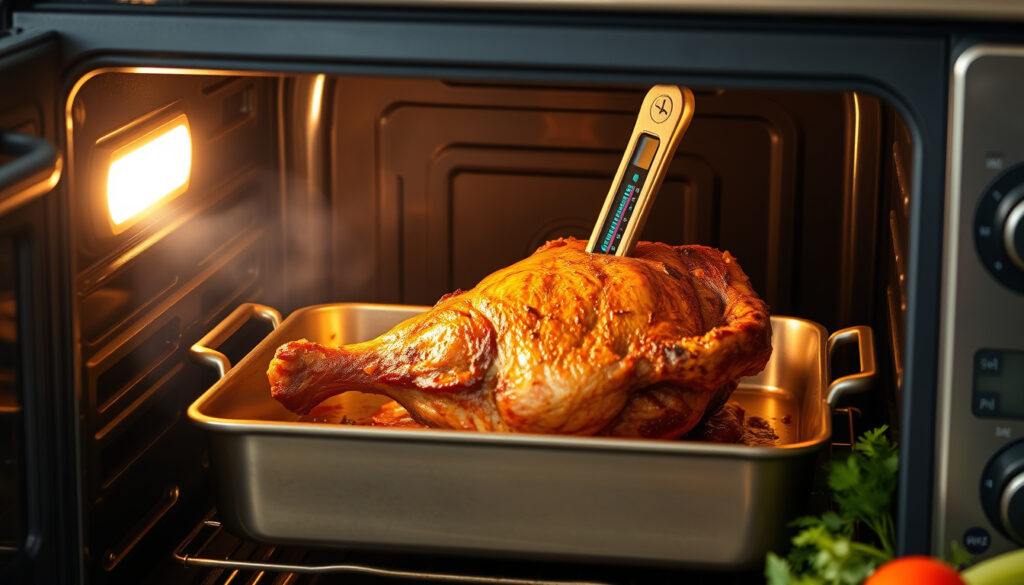
A probe thermometer isn’t a luxury here—it’s how you hit the target every time. Pull the roast 5°F before your target temperature, since carryover cooking will push it higher during rest.
How long should roast beef be cooked for?
Timing depends on three variables: roast weight, desired doneness, and oven type. The most widely cited calculation for standard cuts is 30 minutes per 500g plus an additional 30 minutes at 180°C for medium-rare.
Per weight guide
| Joint weight | Doneness | Approximate time |
|---|---|---|
| 1kg | Medium | 50 minutes at fan 180°C |
| 1.5kg | Medium | 1 hour 10 minutes |
| 1.8kg (4 lb) | Rare | 1 hour 28 minutes |
| 1.8kg (4 lb) | Medium | 1 hour 53 minutes |
| 2.7kg (6 lb) | Rare | 1 hour 36 minutes |
| 2.7kg (6 lb) | Medium | 2 hours 4 minutes |
For premium cuts like beef fillet, 15-20 minutes per 500g delivers medium-rare at 180°C fan. The same cut needs 20-25 minutes per 500g for medium.
Doneness levels
| Doneness | Internal temperature | Visual cue |
|---|---|---|
| Rare | 125°F (52°C) | Deep red centre |
| Medium-rare | 135°F (57°C) | Pink centre |
| Medium | 145°F (63°C) | Pinkish-brown centre |
| Well-done | 160°F (71°C) | Grey throughout |
Calculator basics
The Certified Angus Beef timing tables offer breakdowns for common weights at 325-425°F. A Ribeye Roast weighing 3-4 pounds at 350°F needs 1.5-1.75 hours for medium-rare, while a Tri-Tip at 425°F finishes in 30-40 minutes for the same doneness.
Fan ovens cook faster than conventional ovens, so reduce quoted temperatures by 20°C and check 10-15 minutes early. Your specific oven calibration will shift these estimates by a few minutes either way.
Do I cover beef with foil when roasting?
The answer splits into two phases: cooking and resting. During active roasting, uncovered is the way to go if you want a crust. After cooking, tenting in foil is essential for retaining juices.
During cooking
- Leave uncovered in the oven for browning and crust development
- Covering traps steam and produces a grey, steamed exterior rather than a caramelised crust
- If your oven runs very hot, a loose foil shield over the top prevents excessive browning without full coverage
After roasting
The moment you pull the roast, tent it loosely in foil. This is the resting phase, and 15-20 minutes minimum under foil allows fibres to relax and redistribute juices. For a 1.5kg joint, extending the rest to 30-40 minutes makes a noticeable difference in tenderness.
Impact on juiciness
Covering during cooking forces the beef to steam in its own moisture, resulting in a grey exterior and muted flavour. The high-heat start (240°C for 20 minutes) works only because the beef is exposed. Tenting post-roast, by contrast, keeps the surface warm while the internal temperature equalises—the opposite of cooking’s needs.
Steam produces grey, muted beef; dry heat produces caramelised, flavourful crust. Your foil decision depends entirely on which phase you’re in.
What are common roast beef cooking mistakes?
Most failures trace to three culprits: wrong temperature targeting, insufficient resting, and skipping the sear. Each one has a predictable consequence that the others can’t fix.
Overcooking signs
- Juices run clear but meat looks grey and dry when sliced
- Surface contracts noticeably away from the roasting tin
- Centre has no pink—a sign the roast went 10-15°F past medium-rare
Temp errors
- Relying solely on timing instead of a probe thermometer
- Not accounting for carryover cooking (5-10°F rise during rest)
- Pulling the roast at exactly the target temp rather than 5°F below
Resting skips
Cutting too soon means up to 30% of the juices escape onto the board instead of staying in the meat. A firm resting period lets myoglobin redistribute and fibres firm up for cleaner slices.
Cold beef straight from the fridge cooks unevenly—the outside reaches target temperature while the centre stays raw. The 30-60 minute room temperature rest before cooking is time well spent, not a delay.
What’s the secret to a juicy beef roast?
Juiciness comes down to temperature management and moisture retention, not expensive cuts. Even budget-friendly topside rewards careful technique with a tender, pink centre if you control the heat correctly.
Seasoning tricks
- Salt the joint 30 minutes before cooking, then pat dry—dry surface browns better
- Seasoning an hour ahead draws moisture to the surface, which you can then sear off for better crust
- Keep pepper restrained until after resting if you dislike black specks in your gravy
Meat choice
Sirloin, eye of round, and beef fillet are the most forgiving choices for roasting. Fattier cuts like brisket tolerate longer cooks at lower temperatures and become more tender. Avoid lean, single-muscle cuts for high-heat roasting without braising.
Monitoring doneness
Insert the probe thermometer into the thickest part of the roast, away from bone. For rare, target 125°F; medium-rare needs 135°F; medium reaches 145°F. Digital instant-read thermometers take the guesswork out entirely. For a comprehensive guide on achieving the perfect roast beef, including oven times, temperatures, and essential tips, check out our Lazy Sunday Morning perfume review.
Clarity check
Confirmed
- High initial temp creates a crust (Waitrose & Partners)
- Medium-rare: 135°F internal target (The Delicious Spoon)
- Standard roasting: 180°C (160°C fan) (Campbells Meat)
- Pan-sear: 4-5 minutes total (Waitrose & Partners)
Unclear
- Optimal foil tent duration varies between 15-60 minutes across sources
- Carryover cooking rise is estimated at 5-10°F but not precisely measured per cut
What the experts say
Place the tray in the oven at 200°C and cook for 1 hour for medium beef. It’s a simple approach that works reliably for most home ovens.
— Jamie Oliver (Jamie Oliver recipe page)
For cuts over 1.5kg, start at 240°C for 20 minutes to form an outer crust, then reduce the temperature. This initial blast is what separates a good roast from a great one.
— Waitrose & Partners (UK grocery retailer and recipe authority)
Roast at 425°F for 15 minutes, then reduce to 325°F and continue until the internal temperature reads 130-135°F for medium-rare. The total time comes to roughly 1 hour 20-30 minutes.
Roast beef rewards patience as much as technique. The initial sear, the controlled roast, and the unhurried rest form a three-act process where skipping any part compromises the result. A 1.5kg joint takes roughly two hours from start to table, but most of that is unattended oven time—perfect for getting sides and gravy ready.
Related reading: Beef Casserole Slow Cooker Recipe
thesocialfoodies.co.uk, worthypause.com, redheadcandecorate.com
While traditional searing yields juicy results, this low-temp roast beef guide at 275°F ensures melt-in-the-mouth texture with precise internal temps.
Frequently asked questions
What oven temperature for roast beef?
Standard roasting calls for 180°C (160°C fan oven, gas mark 4). Start larger joints over 1.5kg at 240°C for 20 minutes, then reduce. Jamie Oliver’s method uses 200°C for a simpler one-temperature approach.
How to check roast beef doneness?
A probe thermometer inserted into the thickest part gives the most accurate reading. Target 135°F for medium-rare, 145°F for medium. If relying on time, a 1.5kg joint at fan 180°C takes about 1 hour 10 minutes for medium.
Best cut for roast beef?
Sirloin and eye of round offer the best balance of flavour and tenderness for roasting. Beef fillet produces the most tender result but at higher cost. Brisket and topside are budget-friendly choices suited to longer, slower roasting.
Can I cook roast beef from frozen?
It’s possible but not ideal—frozen beef cooks unevenly and you can’t sear it properly before roasting. Thaw in the refrigerator for 24-48 hours before cooking for consistent results.
How to make roast beef gravy?
Pour off excess fat after roasting, leaving browned bits in the tray. Add a splash of wine or stock, scrape up the fond, and reduce by half. Thicken with a tablespoon of flour or cornstarch mixed with water. Season and strain.
What sides pair with roast beef?
Classic accompaniments include roast potatoes, Yorkshire pudding, roasted root vegetables, and steamed greens. Horseradish cream and mustard are the traditional condiments alongside the meat.
How to store leftover roast beef?
Wrap slices tightly in plastic wrap or place in an airtight container. Refrigerate within two hours of cooking and consume within 3-4 days. Leftover beef works well in sandwiches, salads, or a quick stir-fry.
More related posts
 Cast of White House Down: Full Cast List, Then & Now
 WWE 2K25 Locker Codes: Active List and Redeem Guide
 Botafogo de Futebol e Regata : Hi tory, Samba, Stadium
 Portsmouth vs West Brom – Preview, Prediction and Odds
 Matthew Broome: Age, Biography, and Who He Has Dated
 William Ash: Family, Wife, Children, Age, Life Off-Screen
 Angus, Thongs and Perfect Snogging: Complete Movie Guide (2008)
 A Thousand Splendid Suns – Plot, Themes and Full Analysis
