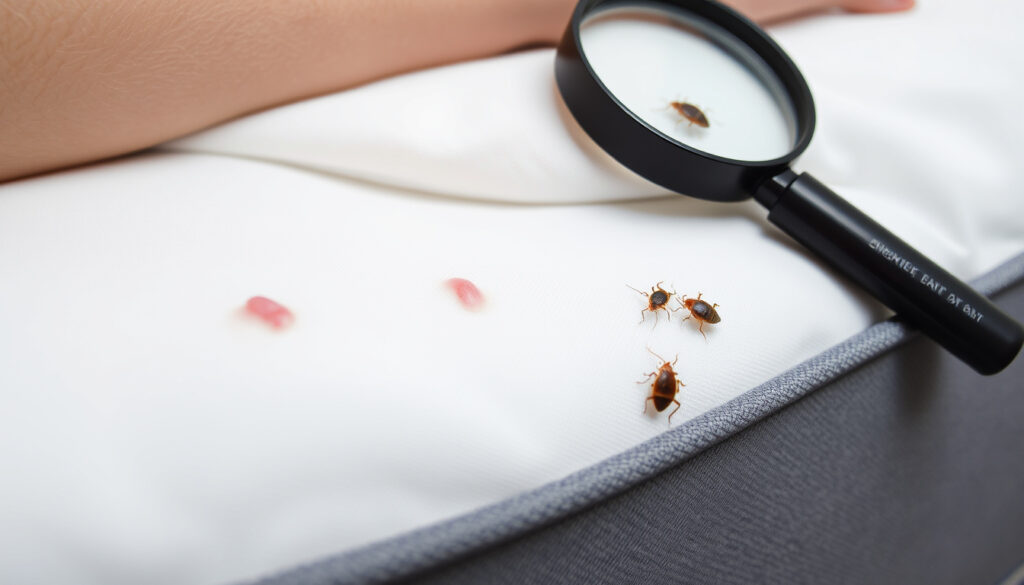
What Do Bed Bug Bites Look Like? Identification Guide
You wake up with a few itchy bumps on your arm and immediately wonder: was it a mosquito, a spider, or something worse? Bed bug bites have a signature look — once you know what to check for, you can often tell them apart without ever seeing the bug itself.
Reaction rate: ~70% of people develop welts ·
Typical pattern: Lines or clusters of 3–5 bites ·
Time to appear: Minutes to 10 days ·
Common sites: Face, neck, arms, hands, legs
Quick snapshot
- Bites often appear in lines or clusters on exposed skin (American Academy of Dermatology)
- Color varies by skin tone: red on light skin, purple/brown on dark skin (Medical News Today)
- Approximately 70% of people show visible welts (WebMD)
- Exact incubation period varies widely (minutes to 10 days)
- Whether secondary infections are common without scratching
- Effectiveness of home remedies compared to medical treatment
- Bite reaction: minutes to 10 days after bite (WebMD)
- Healing: 1–2 weeks without treatment (Medical News Today)
- Hyperpigmentation on dark skin may last months (GoodRx)
- Check for bed bug evidence: blood spots, dark fecal marks, shed skins (American Academy of Dermatology)
- Wash bedding in hot water and vacuum thoroughly (American Academy of Dermatology)
- Consider professional pest control if infestation suspected (American Academy of Dermatology)
Here are the essential facts about bed bug bites at a glance.
| Fact | Value |
|---|---|
| Reaction rate | 70% of people develop welts |
| Bite pattern | Linear or clustered |
| Bite size | 1–5 mm diameter |
| Number of bites per feeding | 3–5 per session |
| Time to first reaction | Minutes to 10 days |
| Healing time | 1–2 weeks without treatment |
How do you tell if a bite is a bed bug?
Appearance and pattern
- Bed bug bites often appear as red or discolored raised bumps that can be flat or blistered (Orkin).
- The hallmark sign is a cluster or line of 3 to 5 bites, sometimes called a “breakfast, lunch, dinner” pattern (American Academy of Dermatology).
Color variation on different skin tones
- On lighter skin, bites typically look red or pink (Medical News Today).
- On black or brown skin, bites may appear purple, brown, or skin-colored, which makes them harder to spot (Medical News Today).
Common locations on the body
- Bites usually occur on exposed skin while sleeping: face, neck, arms, hands, and legs (Healthline).
- Bed bugs rarely bite palms, soles, or areas covered by tight clothing.
The implication: pattern recognition is your first and most reliable diagnostic tool without seeing the insect itself.
What can be mistaken for bed bug bites?
Mosquito bites
- Mosquito bites appear as random, solitary, raised pink bumps that develop quickly after the bite (Cleveland Clinic).
- They lack the tight linear pattern of bed bug bites.
Flea bites
- Flea bites are usually on the lower legs and around ankles, often with a red halo.
- They tend to be smaller and more randomly scattered.
Spider bites
- Spider bites often have a central punctum, may be painful, and are typically solitary.
Allergic reactions or hives
- Hives are larger, change shape quickly, and can appear anywhere — not limited to exposed skin.
Misidentifying a mosquito bite as a bed bug bite can trigger an unnecessary pest panic. The key differentiator is the pattern — bed bug bites form a deliberate line, while other bites do not.
The pattern: line up three bites in a row, and bed bugs become the prime suspect over other insects.
What part of the body do bed bugs bite the most?
Face and neck
- These are common targets because they are often uncovered during sleep.
Arms and hands
- Arms and hands are exposed and easy feeding sites.
Legs and feet
- If you sleep with legs uncovered, bites can appear on the lower legs.
Bed bugs avoid areas covered by heavy clothing or bedding. The pattern holds: exposed skin is the primary feeding zone.
What are three signs you might have bed bugs?
Bite marks on skin
- Waking up with itchy bites in a line or cluster is a strong early indicator (WebMD).
Blood stains on sheets or pillowcases
- Small specks of blood from crushed bugs may appear on bedding (American Academy of Dermatology).
Dark or rusty spots on mattresses or furniture
- Fecal matter shows as dark brown or black spots on mattresses, furniture, or walls (American Academy of Dermatology).
Self-inspection checklist:
- Check mattress seams for live bugs — adults are apple-seed sized and reddish-brown.
- Inspect headboard cracks and baseboards for shed skins.
- Look for dark fecal spots on mattresses, furniture, or walls.
- Sniff for the sweet musty odor sometimes reported with heavy infestations.
Do bed bug bites itch?
Why bed bug bites itch
- Itching is caused by an allergic reaction to proteins in bed bug saliva (Orkin).
Variation in itchiness
- Most people experience intense itching, but reaction intensity varies from mild to severe. Some people have no itching at all (WebMD).
How to relieve itching
- Over-the-counter antihistamines and corticosteroid creams can reduce itching and swelling (American Academy of Dermatology).
- Avoid scratching to reduce the risk of secondary infection.
The catch: the absence of itch does not rule out bed bugs — roughly 30% of people show no reaction at all.
Comparison: Bed bug bites vs. Other insect bites
Six different bite types, one clear pattern: bed bugs leave a signature line, while mosquitoes, fleas, and spiders do not.
| Feature | Bed bug | Mosquito | Flea | Spider |
|---|---|---|---|---|
| Pattern | Line or cluster of 3–5 | Random, solitary | Scattered, often on lower legs | Usually solitary |
| Appearance | Red/purple/brown welt, flat or raised | Puffy, pink, raised | Small red bump with halo | Central punctum, possible blister |
| Itch | Intense, often delayed | Immediate itch | Intense itch | May be painful, not always itchy |
| Location | Exposed skin (face, arms, legs) | Any exposed skin | Ankles, lower legs | Anywhere, often indoors |
| Timing | Appears hours to 10 days later | Immediate to hours | Immediate to hours | Hours to days |
The pattern is the key differentiator. If you see three bites in a neat row, the odds are high they’re from a bed bug.
What’s the best way to treat bed bug bites?
Home treatment
- Wash the area with soap and water to reduce the risk of infection.
- Apply a cold compress to reduce swelling and itching.
- Use over-the-counter 1% hydrocortisone cream or oral antihistamines.
When to see a doctor
- If you develop signs of an allergic reaction (extensive swelling, difficulty breathing).
- If the bite becomes infected (increasing pain, redness, pus, or fever).
- If itching persists beyond two weeks without improvement.
The catch: most bites resolve on their own, but secondary infection from scratching is the main reason to seek medical care.
Clarity: What we know and what remains unclear
Confirmed facts
- Bed bug bites are caused by Cimex lectularius.
- Bites often appear in lines or clusters on exposed skin.
- Not everyone reacts to bed bug bites.
- Bites are typically itchy and red or discolored depending on skin tone.
What’s unclear
- Exact incubation period for bite reactions varies widely.
- Whether secondary infections are common without scratching.
- Effectiveness of specific home remedies compared to medical treatment.
- Whether some people develop tolerance to bites over repeated exposure.
“Bed bugs prefer to feed on exposed skin such as the face, neck, arms, and hands. They avoid areas where clothing or bedding is pressed tightly against the skin.”
U.S. Environmental Protection Agency (EPA) (federal regulatory agency)
“Some people have little or no visible reaction to bed bug bites, while others may develop intense itching and welts.”
Centers for Disease Control and Prevention (CDC) (national public health agency)
“Bed bug bites can cause itchy red bumps that often appear in a line or cluster. On darker skin they may look purple or brown.”
Even if you have no visible bites, you can still have an infestation. Approximately 30% of people do not react to bites, so the absence of marks does not mean you are in the clear.
For anyone waking up with mysterious bites, the path forward is clear: look for the pattern, check your bedding for evidence, and treat the itch. If you find blood spots or dark fecal marks, the infestation is real. For renters in the UK, your landlord may be responsible for pest control if the problem existed before you moved in — know your rights.
For a detailed visual reference covering bite patterns on different skin tones, see this comprehensive bed bug bites identification guide from CanadaView.
Frequently asked questions
Can bed bugs transmit diseases?
According to the CDC (national public health agency), bed bugs are not known to spread disease. Their health impact is primarily through allergic reactions, secondary infections from scratching, and mental health effects.
How long do bed bugs live without feeding?
Bed bugs can survive several months without a blood meal under cool conditions. Nymphs (young bed bugs) die sooner than adults without feeding.
Do bed bugs bite through clothing?
No, bed bugs cannot bite through clothing. They feed only on exposed skin. Tight clothing provides a barrier, which is why bites often appear on uncovered areas.
Why do bed bug bites itch?
The itching is an allergic reaction to proteins in bed bug saliva (Orkin). The body releases histamine at the bite site, causing inflammation and itch.
Can I treat bed bug bites at home?
Yes. Wash with soap and water, apply a cold compress, and use over-the-counter anti-itch creams or antihistamines. Avoid scratching to prevent infection (American Academy of Dermatology).
How can I prevent bed bug infestations?
Inspect secondhand furniture before bringing it home. Use mattress encasements. When traveling, check hotel headboards and mattress seams. Wash and dry luggage contents on high heat after trips.
When should I see a doctor for bed bug bites?
If you experience severe swelling, signs of infection (redness, warmth, pus), difficulty breathing, or if bites do not heal within two weeks, see a doctor.
Are bed bug bites contagious?
No, bed bug bites cannot be passed from person to person. Only the insects spread, not the bite marks.
More related posts
 West Ham vs Man City: TV Channel, Prediction, Results
 Black Mirror Season 7: Release Date, 6 Episodes, Cast & Trailer
 Beverley Knight: Biography, Songs, Net Worth, Family, and More
 Robin Windsor: Strictly Come Dancing star’s death and inquest
 Speed Awareness Course Cost: Fees, Eligibility & Worth
 Doki Doki Literature Club: Horror, Age Rating & Mental Health
 Hairy Bikers Sausage Casserole Recipe: Easy One-Pot Guide
 Michael Burry: Net Worth, Portfolio & Predictions 2025
