iPhone 12 Screen Size – Dimensions and Specs for All Models
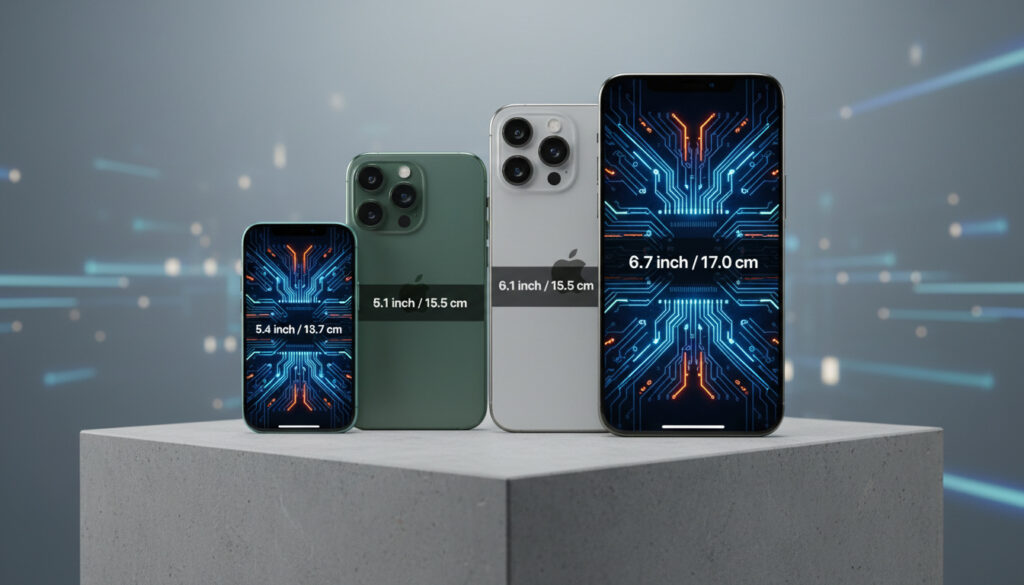
The iPhone 12 generation marked a pivotal shift in Apple’s smartphone display strategy upon its October 2020 release. Four distinct models emerged from this redesign, each sporting edge-to-edge OLED panels that replaced the LCD technology of previous generations. The standard iPhone 12 anchored the lineup with a 6.1-inch diagonal measurement, while Apple expanded consumer choice with the compact 5.4-inch mini and the expansive 6.7-inch Pro Max variants.
This architectural overhaul brought uniform Super Retina XDR OLED technology across all configurations, paired with Ceramic Shield protection and HDR capabilities. The dimensional refinements reduced bezel sizes significantly, increasing screen-to-body ratios compared to the iPhone 11 series. Understanding the precise measurements and technical distinctions between these variants remains essential for users evaluating device compatibility and display performance.
Technical specifications confirm that all four models share identical display technologies despite varying dimensions, with Wikipedia’s iPhone 12 technical documentation verifying the Super Retina XDR implementation across the entire series.
What Is the iPhone 12 Screen Size?
iPhone 12 mini
5.4 inches (137 mm)
2340 × 1080 px
476 PPI
iPhone 12
6.1 inches (155 mm)
2532 × 1170 px
460 PPI
iPhone 12 Pro
6.1 inches (155 mm)
2532 × 1170 px
460 PPI
iPhone 12 Pro Max
6.7 inches (170 mm)
2778 × 1284 px
458 PPI
- All four models utilize Super Retina XDR OLED technology with HDR10 and Dolby Vision support
- Peak brightness reaches 1200 nits across the entire lineup
- Standard refresh rate remains 60Hz despite Pro branding on two models
- Aspect ratio measures approximately 19.5:9 across all variants
- Screen-to-body ratios range from 85% on the mini to 87% on the Pro Max
- Physical dimensions vary significantly despite shared screen sizes between base and Pro models
| Specification | iPhone 12 mini | iPhone 12 | iPhone 12 Pro | iPhone 12 Pro Max |
|---|---|---|---|---|
| Screen Size (diagonal) | 5.4 inches (137 mm) | 6.1 inches (155 mm) | 6.1 inches (155 mm) | 6.7 inches (170 mm) |
| Resolution | 2340 × 1080 px | 2532 × 1170 px | 2532 × 1170 px | 2778 × 1284 px |
| Pixel Density | 476 PPI | 460 PPI | 460 PPI | 458 PPI |
| Physical Dimensions | 131.5 × 64.2 × 7.4 mm | 146.7 × 71.5 × 7.4 mm | 146.7 × 71.5 × 7.4 mm | 160.8 × 78.1 × 7.4 mm |
| Weight | 135g | 164g | 189g | 228g |
| Display Type | Super Retina XDR OLED | Super Retina XDR OLED | Super Retina XDR OLED | Super Retina XDR OLED |
| Peak Brightness | 1200 nits | 1200 nits | 1200 nits | 1200 nits |
| Screen-to-Body Ratio | ~85% | ~86% | ~86% | ~87% |
iPhone 12 Model Variants: Screen Sizes Explained
The iPhone 12 family introduced unprecedented size diversity to Apple’s flagship range. Technical specifications compiled by Back Market demonstrate how Apple segmented the lineup through dimensional differentiation rather than display technology alone.
iPhone 12 mini Dimensions
The iPhone 12 mini occupies the smallest footprint in the series at 131.5 × 64.2 × 7.4 mm, rendering it the most compact 5G smartphone produced by Apple at launch. Its 5.4-inch display maintains full OLED quality despite the reduced dimensions, achieving the highest pixel density in the lineup at 476 pixels per inch according to architectural measurements.
iPhone 12 and iPhone 12 Pro Screen Specifications
Both the standard iPhone 12 and iPhone 12 Pro share identical screen dimensions of 6.1 inches diagonally with matching 2532 × 1170 pixel resolutions at 460 PPI. The Pro variant distinguishes itself through camera capabilities and material finishes rather than display specifications, though both devices measure 146.7 × 71.5 × 7.4 mm physically. Further technical breakdowns appear in our detailed model specs.
iPhone 12 Pro Max Display Scale
The Pro Max variant introduces the largest screen in Apple’s 2020 catalog at 6.7 inches, translating to 2778 × 1284 pixels at 458 PPI. Physical dimensions of 160.8 × 78.1 × 7.4 mm accommodate this expanded viewing area while maintaining the same 7.4 mm thickness as its siblings.
Despite identical screen specifications between iPhone 12 and iPhone 12 Pro, the Pro model weighs 189g compared to 164g, attributed to stainless steel framing and additional camera hardware rather than display components.
iPhone 12 Screen Size vs Previous Models
iPhone 11 Display Transition
The iPhone 11 generation utilized a 6.1-inch Liquid Retina LCD panel with 1792 × 828 resolution at 326 PPI, representing a significant technological gap from the iPhone 12’s OLED implementation. XDA Developers’ technical analysis confirms the shift to Super Retina XDR technology eliminated the thick bezels and lower contrast inherent to LCD construction, while maintaining the same diagonal measurement on the standard models. Reference our iPhone 12 series display comparison for additional technical diagrams.
Dimensional Efficiency Improvements
Apple reduced the physical footprint of the 6.1-inch iPhone 12 compared to the iPhone 11 despite identical screen sizes. The iPhone 11 measured 150.9 × 75.7 × 8.3 mm, whereas the iPhone 12 compresses these dimensions to 146.7 × 71.5 × 7.4 mm while simultaneously increasing display quality and brightness capabilities.
iPhone 12 Screen Resolution and Technical Specs
Pixel Density Calculations
The iPhone 12 mini achieves the sharpest display at 476 PPI, followed by the iPhone 12 and Pro at 460 PPI, with the Pro Max at 458 PPI. Device visualization data indicates these variations result from maintaining consistent pixel densities across different panel sizes while optimizing power consumption.
OLED Technical Implementation
All models implement identical Super Retina XDR OLED panels featuring HDR10 and Dolby Vision certification. The Ceramic Shield front cover, co-developed with Corning, provides four times improved drop performance compared to previous glass formulations. Resolution databases confirm logical scaling at 390 × 844 points for the 6.1-inch models with 3× density multiplication.
While the iPhone 12 features a physical resolution of 2532 × 1170 pixels, iOS utilizes logical scaling at 390 × 844 points with 3× density multiplication, optimizing interface element sizing across applications.
Despite the “Pro” designation, iPhone 12 Pro and Pro Max models maintain a 60Hz refresh rate. ProMotion adaptive refresh technology did not debut in iPhone displays until the iPhone 13 Pro generation.
When Did iPhone 12 Screen Sizes Debut?
The iPhone 12 series introduced its display specifications through a staggered release schedule in autumn 2020. Historical release data documents the specific chronological rollout of these dimensional variants.
- October 2020: Apple announces four iPhone 12 models with unified OLED display technology, replacing the LCD panels used in previous standard models.
- October 23, 2020: iPhone 12 and iPhone 12 Pro become available, featuring 6.1-inch Super Retina XDR displays with Ceramic Shield protection.
- November 6, 2020: iPhone 12 mini launches, offering 5.4-inch display dimensions in a compact form factor.
- November 13, 2020: iPhone 12 Pro Max releases with 6.7-inch display, representing the largest screen size in Apple’s smartphone history at that time.
Which iPhone 12 Specifications Are Confirmed?
Following the October 2020 announcement, all display specifications received verification through independent technical analysis and aggregated manufacturer data.
| Established Facts | Pre-Launch Uncertainty |
|---|---|
| Four distinct screen sizes: 5.4″, 6.1″ (two models), 6.7″ | Early rumors suggested 120Hz ProMotion for Pro models proved incorrect |
| Universal OLED adoption across all variants | Specific PPI calculations varied between sources by 1-2 points |
| 1200 nits peak brightness capability | Exact mm dimensions required post-release verification |
| 60Hz refresh rate standard across lineup | Ceramic Shield durability claims required independent testing |
Why Did Apple Change iPhone 12 Display Technology?
The iPhone 12 series introduced ceramic-hardened glass displays with edge-to-edge OLED construction, representing Apple’s first wholesale transition from LCD to OLED across the entire flagship lineup. Technical documentation references ceramic shield technology enhancing durability while maintaining optical clarity.
The XDR (Extreme Dynamic Range) designation indicates support for HDR content up to 1200 nits peak brightness, facilitating cinema-grade color accuracy for professional content creation and consumption. This technological shift enabled the reduced bezels and improved screen-to-body ratios that distinguish the iPhone 12 from its predecessors.
What Do Technical Sources Say About iPhone 12 Displays?
Independent technical databases confirm the dimensional specifications through aggregated manufacturer data. PhoneArena’s specification database provides comparative analysis tools for verifying these measurements.
The iPhone 12 series features Super Retina XDR OLED displays with HDR10, Dolby Vision, up to 1200 nits peak brightness, and Ceramic Shield protection across all four models.
— Aggregated technical specifications, Wikipedia iPhone 12 Technical Page
iPhone 11 (6.1″ LCD, 1792 × 828 px at 326 PPI) contrasts sharply with iPhone 12’s OLED upgrade, higher PPI, smaller bezels, and better brightness/contrast.
— Display technology analysis, XDA Developers
How Do iPhone 12 Screen Sizes Compare Today?
The iPhone 12 series established a new dimensional standard through its October 2020 release, offering four distinct screen sizes ranging from the 5.4-inch mini to the 6.7-inch Pro Max. Each variant maintains consistent OLED quality, HDR support, and 60Hz refresh rates despite varying physical dimensions and pixel densities. iPhone 12 series display comparison data remains relevant for current device evaluations.
Frequently Asked Questions
Is the iPhone 12 screen size the same as iPhone 12 Pro?
Yes, both the iPhone 12 and iPhone 12 Pro feature identical 6.1-inch diagonal measurements with matching 2532 × 1170 pixel resolutions at 460 PPI.
What is the iPhone 12 mini screen size in millimeters?
The iPhone 12 mini display measures 137 mm diagonally with physical device dimensions of 131.5 × 64.2 × 7.4 mm.
Does iPhone 12 have a bigger screen than iPhone 11?
The standard iPhone 12 and iPhone 11 both measure 6.1 inches diagonally, though the iPhone 12 achieves a higher screen-to-body ratio through reduced bezels.
What is the pixel density of iPhone 12 Pro Max?
The iPhone 12 Pro Max features a pixel density of 458 pixels per inch on its 6.7-inch display with 2778 × 1284 resolution.
Are all iPhone 12 displays OLED?
Yes, Apple implemented Super Retina XDR OLED technology across all four iPhone 12 models, replacing the LCD panels used in previous standard models.
What resolution is the iPhone 12 screen?
The standard iPhone 12 displays 2532 × 1170 pixels at 460 PPI, while the mini uses 2340 × 1080 and the Pro Max uses 2778 × 1284.
How thick is the iPhone 12 screen?
All iPhone 12 models maintain a uniform 7.4 mm thickness including the Ceramic Shield display assembly, measuring 0.29 inches.
More related posts
 Blood Clot in Period: What’ Normal and When to Worry
 Holiday Wheelie Bin Fines UK: Key Rules and Penalties
 Richard Nixon: Watergate Scandal and Resignation
 William Ash: Family, Wife, Children, Age, Life Off-Screen
 Michael Burry: Net Worth, Portfolio & Predictions 2025
 Martin Sheen Movies and TV Shows – Complete Filmography Guide
 Cottons Hotel and Spa – Knutsford 4-Star Luxury Guide
 Tom Wilkinson: Biography, Key Films & Death
