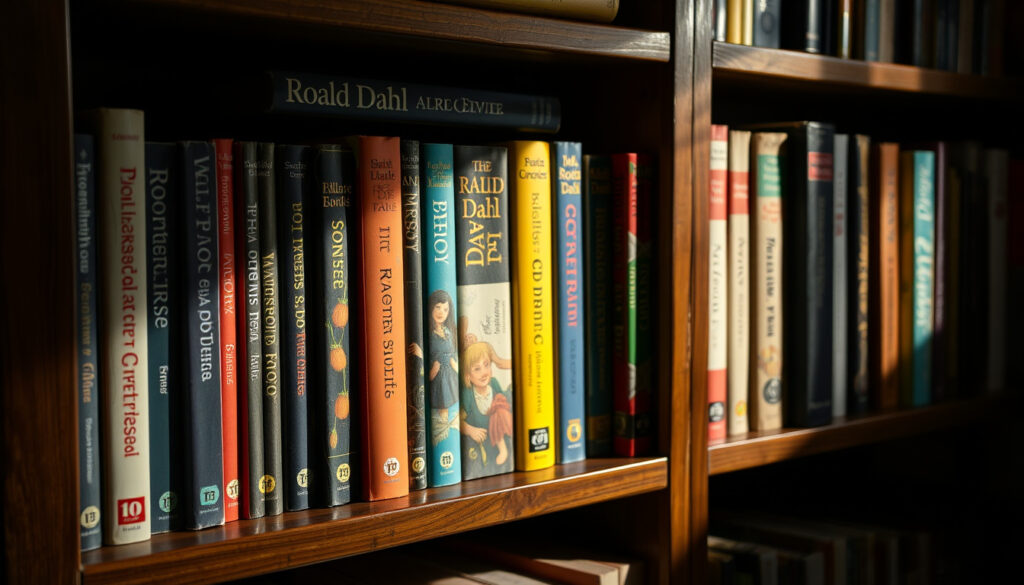
Roald Dahl Book Guide: Famous, Darkest, and Age Picks
There’s a reason Roald Dahl’s books sit on shelves in nearly every English-speaking household. They’re the rare stories that make children howl with laughter and adults wince at the same twist. This guide separates Dahl’s two distinct libraries—children’s novels and adult short stories—to answer the questions readers actually ask: which book is most famous, which is darkest, what order to read them in, and what age each book suits best.
Born: 13 September 1916, Llandaff, Wales ·
Died: 23 November 1990, Oxford, England ·
First published book: Over to You (1946) ·
First children’s book: James and the Giant Peach (1961) ·
Goodreads top title: Matilda ·
Late-life diagnosis: Waldenström macroglobulinemia (1990)
Quick snapshot
- Roald Dahl was born in 1916 and died in 1990 (Roald Dahl Museum (official archive)).
- Over to You was Dahl’s first published book in 1946 (Wikipedia (bibliography reference)).
- James and the Giant Peach was Dahl’s first children’s book in 1961 (Roald Dahl Museum (published works timeline)).
- Goodreads lists Matilda first on its Roald Dahl list (Wikipedia (bibliography summary)).
- Whether a Dahl title is “best” is subjective and depends on reader age and taste.
- Which Dahl book is “darkest” changes if you mean children’s novels versus adult short stories.
- Publisher and library age bandings vary by edition, so age recommendations are ranges rather than exact rules.
- 1916: Born in Llandaff, Wales.
- 1946: First book Over to You (adult stories).
- 1961: First children’s book James and the Giant Peach.
- 1964: Charlie and the Chocolate Factory.
- 1988: Matilda published.
- Choose a book based on age and preference: lighter titles for young readers, darker ones for older kids and adults.
- Explore Dahl’s adult short stories for a completely different tone.
Seven key facts about Roald Dahl’s life and work, drawn from the Roald Dahl Museum (official archive) and Wikipedia (bibliography reference):
| Field | Value |
|---|---|
| Born | 13 September 1916, Llandaff, Wales |
| Died | 23 November 1990, Oxford, England |
| First published book | Over to You (1946) |
| First children’s book | James and the Giant Peach (1961) |
| Goodreads top title | Matilda |
| Known children’s illustrator | Quentin Blake |
| Late-life diagnosis | Waldenström macroglobulinemia (1990) |
What is Roald Dahl’s most famous book?
If you ask most readers to name a Roald Dahl book, two titles come up first: Matilda and Charlie and the Chocolate Factory. On Goodreads’ community-voted list, Matilda takes the top spot, followed by Charlie and the Chocolate Factory in second place (Wikipedia (bibliography overview)). The Penguin UK (children’s publishing guide) also flags these two as the most likely starting points for new readers.
Why do popularity lists rank Matilda and Charlie and the Chocolate Factory highly?
Matilda (1988) and Charlie and the Chocolate Factory (1964) have been adapted into multiple films, stage musicals, and audiobooks, giving them a cultural footprint far beyond the page. The University of Missouri’s L.S. Fellowship (literary analysis) notes that Matilda is frequently described as one of Dahl’s best-known and most admired children’s novels.
How do readers and critics decide on a Dahl favorite?
“Most famous” and “best” are different judgments. The Wikipedia bibliography (reference work) treats James and the Giant Peach, Charlie and the Chocolate Factory, Matilda, The Witches, Fantastic Mr Fox, The BFG, The Twits, and George’s Marvellous Medicine as core Dahl titles, but does not rank them. There is no single universally accepted best book.
The pattern: popularity and critical acclaim don’t always align, but the movie adaptations settle the fame debate.
What is the order of Roald Dahl books?
Dahl’s bibliography spans more than four decades and includes two distinct tracks. The Roald Dahl Museum (published works timeline) provides the definitive chronological record.
What books are included in the Roald Dahl collection?
Dahl published adult fiction first: Over to You appeared in 1946 (Roald Dahl Museum (timeline)). His first children’s book, James and the Giant Peach, followed in 1961. Major children’s novels include Charlie and the Chocolate Factory (1964), The BFG (1982), The Witches (1983), and Matilda (1988). The Wikipedia bibliography (reference work) counts 19 novels, 13 collections, 3 poems, 12 scripts, 1 edited book, and 9 non-fiction works.
Do Roald Dahl books need to be read in order?
No—most are standalone. The only exception is Charlie and the Great Glass Elevator, which is a direct sequel to Charlie and the Chocolate Factory (Reef Review (reading guide)). The BookSeries Blog (book order guide) recommends reading in publication order only if you want to see Dahl’s style evolve.
The pattern: you can jump into any book without background, but the darker and more complex titles came later in his career.
What is Roald Dahl’s darkest book?
The answer depends on whether you mean children’s novels or adult short stories. The two halves of Dahl’s catalog are very different in tone.
What makes Dahl’s short stories for adults so dark?
Dahl’s adult collections—Someone Like You (1953), Kiss Kiss (1960), and Switch Bitch (1974)—use black humor, macabre scenarios, and twist endings. Tales of the Unexpected became a well-known anthology label for many of these stories (Roald Dahl Museum (published works)).
Is The Witches darker than his other children’s books?
Among the children’s novels, The Witches (1983) is frequently named as the darkest. The University of Missouri’s L.S. Fellowship (literary analysis) notes that it is often recommended for older children because of its scarier scenes. By contrast, The Enormous Crocodile is short and less frightening, while Danny, the Champion of the World is a more emotional father-son story (BookSeries Blog (book analysis)).
If you’re an adult expecting more of the same whimsy, Dahl’s short stories are a different beast—they are genuinely unsettling. Parents considering The Witches for a sensitive child should read a chapter first.
The implication: darkness in Dahl’s work is a spectrum, not a single point, and the adult collections sit at the far end.
What age is best for Roald Dahl books?
Age recommendations vary by publisher and edition, but a general pattern emerges from reading guides and library advice.
Can a seven-year-old read Roald Dahl?
Yes, with the right title. A seven-year-old can often handle shorter books such as The Twits and Fantastic Mr Fox with support (Reef Review (age guide)). The Enormous Crocodile is also a strong early pick because it is short and less frightening (Reef Review (age guide)).
Which Roald Dahl books are best for each age group?
The Penguin UK (children’s publishing guide) suggests that The BFG and Matilda are common read-aloud choices for ages 7 and up, and independent reads from about 8 to 9. The Witches is often recommended for ages 8 and older due to its scarier scenes (University of Missouri’s L.S. Fellowship (literary analysis)). George’s Marvellous Medicine suits readers old enough for broader humor and mild mischief (Reef Review (age guide)).
How to choose a Roald Dahl book by age
- Ages 5–7: Start with The Enormous Crocodile, The Twits, or Fantastic Mr Fox. These are short, illustrated, and low on scare factor.
- Ages 7–9: Move to The BFG, Matilda, or Danny, the Champion of the World. These have longer chapters and more emotional depth.
- Ages 8–10: The Witches and Charlie and the Chocolate Factory work well for children who can handle darker moments.
- Ages 10+ and adults: Explore adult short story collections like Someone Like You or Kiss Kiss.
The implication: age is a guide, not a rule. A confident seven-year-old may enjoy Matilda as a read-aloud, while a ten-year-old may still love The Twits.
Which Roald Dahl books are for adults?
Dahl wrote for adults long before he wrote for children. His adult output consists entirely of short story collections, and they are markedly different from the children’s books.
What are Roald Dahl’s adult short story collections?
Over to You (1946) was Dahl’s first adult book, based partly on his wartime experiences as a RAF pilot. Someone Like You (1953), Kiss Kiss (1960), and Switch Bitch (1974) are the core adult collections (Roald Dahl Museum (published works timeline)). Many of these stories were later compiled under the Tales of the Unexpected umbrella.
Is there a difference between Dahl’s children’s books and adult books?
Yes—the adult stories are darker, more cynical, and often end with a twist that leaves the reader unsettled. The BookSeries Blog (book comparison) notes that Dahl’s children’s novels and adult collections are marketed to completely different audiences. Adults who enjoy Dahl’s children’s humor may find his adult work a shock.
A parent who loves Dahl’s children’s books may be surprised by the adult stories. The upside: they offer a richer, more complex view of Dahl’s writing range. The downside: they are not suitable for young readers.
The pattern: the adult collections are where Dahl’s cynicism and macabre inventiveness run free, unconstrained by a child audience.
What was Roald Dahl diagnosed with?
Late in life, Dahl was diagnosed with Waldenström macroglobulinemia, a rare blood cancer (Roald Dahl Museum (biographical context)). He died on 23 November 1990 in Oxford, England, at the age of 74.
What does Mayo Clinic Proceedings say about Roald Dahl’s health?
The Mayo Clinic Proceedings (peer-reviewed medical journal) documented Dahl’s diagnosis and noted that his health history also included a severe infection after his son Theo’s accident (Wikipedia (bibliography reference, citing Mayo Clinic Proceedings)).
How did Roald Dahl’s health history affect his work?
After his son Theo’s head injury, Dahl helped develop the Wade-Dahl-Till valve, a shunt for hydrocephalus. His daughter Olivia’s death from measles encephalitis led him to become a vocal advocate for measles vaccination (Roald Dahl Museum (biographical context)). These personal tragedies informed the compassion and darkness in his later books.
The consequence: Dahl’s health battles gave him a firsthand perspective on medical science, which he translated into themes of resilience and injustice in books like The BFG and Matilda.
Four of Dahl’s most popular children’s books, compared by publication year, reader age, and tone:
| Title | Published | Typical age range | Dark elements | Goodreads rank (Dahl list) |
|---|---|---|---|---|
| Matilda | 1988 | 7–10 | Miss Trunchbull’s cruelty, revenge | 1 |
| Charlie and the Chocolate Factory | 1964 | 7–10 | Child punishments, Oompa-Loompa ethics | 2 |
| The BFG | 1982 | 7–9 | Child-eating giants, dream sequences | 3 (estimated) |
| The Witches | 1983 | 8–12 | Child transformation, witch extermination | 4 (estimated) |
A full spec table of Dahl’s major children’s novels, with page counts and illustration notes:
| Title | Year | Pages (approx) | Illustrator |
|---|---|---|---|
| James and the Giant Peach | 1961 | 160 | Quentin Blake |
| Charlie and the Chocolate Factory | 1964 | 176 | Quentin Blake |
| Fantastic Mr Fox | 1970 | 96 | Quentin Blake |
| Danny, the Champion of the World | 1975 | 240 | Quentin Blake |
| The Enormous Crocodile | 1978 | 64 | Quentin Blake |
| The Twits | 1980 | 96 | Quentin Blake |
| George’s Marvellous Medicine | 1981 | 128 | Quentin Blake |
| The BFG | 1982 | 224 | Quentin Blake |
| The Witches | 1983 | 208 | Quentin Blake |
| Matilda | 1988 | 240 | Quentin Blake |
| Charlie and the Great Glass Elevator | 1972 | 160 | Quentin Blake |
| The Minpins | 1991 | 64 | Quentin Blake |
Pros and cons of reading Dahl in chronological order
Upsides
- Shows Dahl’s evolution from adult dark humor to children’s storytelling.
- You experience the Wade-Dahl-Till influence in later books.
- No need to adjust reading level between books.
Downsides
- Adult collections are not suitable for children, so you must switch audiences.
- Some early books are less polished than later classics.
- Chronological order delays the most famous titles until late in the list.
How to pick the perfect Roald Dahl book in 3 steps
- Identify the reader’s age and sensitivity. Use the age guide above to narrow down the list. For a 7-year-old, avoid The Witches unless they are desensitized to scares.
- Decide on tone. If the reader likes mischief and slapstick, try The Twits or George’s Marvellous Medicine. If they prefer emotional stories, Danny, the Champion of the World or The BFG.
- Check availability. Most titles are available in paperback, hardcover, audiobook, and library editions. The Penguin UK (children’s guide) offers a curated reading list.
Roald Dahl publication timeline
- 1916 – Roald Dahl is born in Llandaff, Wales.
- 1946 – Dahl publishes his first book, Over to You (adult short stories).
- 1961 – James and the Giant Peach, his first children’s book, is published.
- 1964 – Charlie and the Chocolate Factory is published.
- 1982 – The BFG is published.
- 1983 – The Witches is published.
- 1988 – Matilda is published.
- 1990 – Dahl dies in Oxford, England, at age 74.
Source: Roald Dahl Museum (published works timeline).
Confirmed facts vs. what’s still unclear
Confirmed facts
- Roald Dahl was born in 1916 and died in 1990.
- Over to You was Dahl’s first published book (1946).
- James and the Giant Peach was Dahl’s first children’s book (1961).
- Goodreads lists Matilda first on its Roald Dahl list.
- Dahl’s adult short stories are distinctly darker and more macabre than his children’s novels.
What’s still unclear
- Whether a Dahl title is “best” is subjective and depends on reader age and taste.
- Which Dahl book is “darkest” changes if you mean children’s novels versus adult short stories.
- Publisher and library age bandings vary by edition, so age recommendations are ranges rather than exact rules.
- Global most-read book rankings use different sales and print figures, so exact positions vary by source.
What the sources say
“The Roald Dahl Museum provides a definitive timeline of Roald Dahl’s published works, covering both his children’s books and adult collections.”
— Roald Dahl Museum (official archive)
“Goodreads’ Roald Dahl list places Matilda first and Charlie and the Chocolate Factory second, reflecting community voting on popularity.”
— Wikipedia (bibliography reference)
“Late in life, Dahl was diagnosed with Waldenström macroglobulinemia, a rare blood cancer, as documented in the Mayo Clinic Proceedings.”
— Wikipedia (citing Mayo Clinic Proceedings)
“Penguin UK’s guide recommends starting with Matilda or Charlie and the Chocolate Factory, and provides age-specific suggestions for each book.”
— Penguin UK (children’s publishing guide)
For a parent looking to introduce Dahl to a seven-year-old, the choice is clear: start with The Twits or Fantastic Mr Fox, or risk the nightmare of a child who can’t sleep after The Witches. For an adult who has only read Dahl’s children’s books, the adult short stories offer a completely different, darker world—just be prepared for the twist endings.
britaindaily.uk, australianinsight.org, rarestkindofbest.com, isfdb.org, openlibrary.org, readingquests.com
For a detailed breakdown of his most famous works and suggested reading order, check out this comprehensive Roald Dahl book guide.
Frequently asked questions
Which Roald Dahl book should I start with?
For a child, start with The Twits or Fantastic Mr Fox. For an adult, try Matilda or Charlie and the Chocolate Factory first, then explore the adult short stories.
Who illustrated most of Roald Dahl’s children’s books?
Quentin Blake illustrated the majority of Dahl’s children’s books from the 1970s onward. His distinctive style is closely associated with Dahl’s characters.
Which Roald Dahl books have been made into films?
Charlie and the Chocolate Factory, Matilda, The BFG, The Witches, Fantastic Mr Fox, and James and the Giant Peach have all been adapted for film or television.
Are Roald Dahl books suitable for reluctant readers?
Yes—short, humorous titles like The Twits and The Enormous Crocodile work well for reluctant readers because of their fast pacing and illustrations.
Do Roald Dahl audiobooks exist?
Yes, many are narrated by actors such as Kate Winslet (Matilda) and David Walliams (The BFG). They are widely available on Audible and other platforms.
Related reading
More related posts
 Bernard Hill: Cause of Death, Movies, Marriage, and Career
 Steve Coogan Movies and TV Shows – Complete Filmography Guide
 Mufasa: The Lion King – Sleeper Hit Box Office, Plot & Cast
 Christmas Under the Northern Lights: Worth Watching? Review
 West Ham vs Man City: TV Channel, Prediction, Results
 Gmail Login Another Account – Switch Without Signing Out
 Average Water Bill UK – 2024 Costs by Region and Savings Tips
 Cape Verdean Ethnicity, Identity, and Travel Guide
