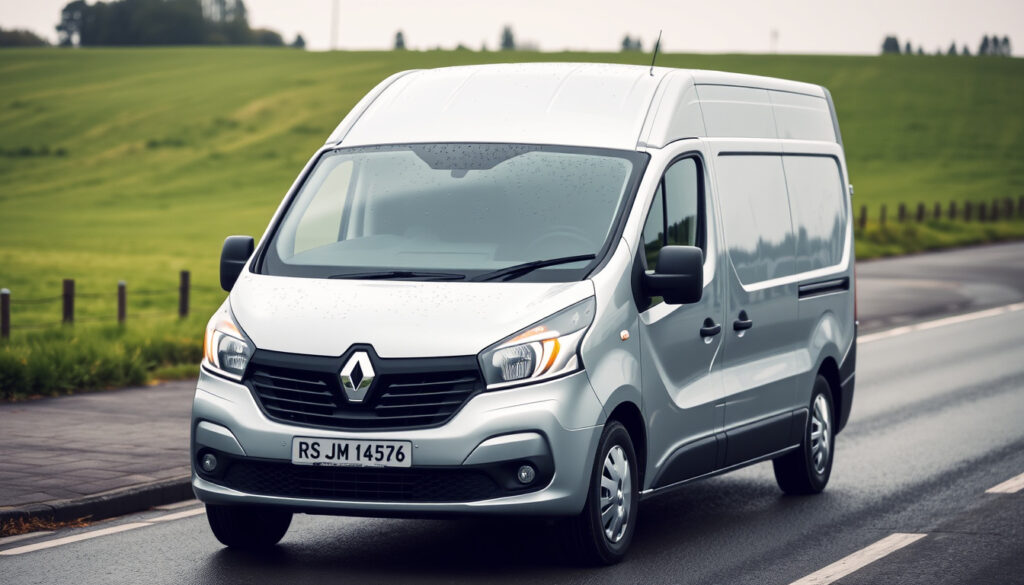
Renault Trafic: Reliability, Price, Specs & Irish Buyer Tips
Anyone who’s ever shopped for a used van in Ireland knows the name. The Renault Trafic has been a fixture on Irish roads since 1980, and for good reason: it’s a practical, mid-size workhorse that does the job without fuss.
Production start: 1980 ·
Seats: 3 to 9 depend on variant ·
Engine options: 1.6 dCi, 2.0 Blue dCi ·
Starting price (Ireland, new): €34,590 ·
Load volume (panel van): up to 8.9 cubic metres
Quick snapshot
- Generally reliable mid-size van (What Car? (vehicle review authority))
- Watch for injector and EGR issues (What Car? (vehicle review authority))
- Timing belt maintenance critical on 1.6 dCi (RAC (driving and vehicle advice))
- Panel van – 3 seats (Renault Ireland (official brand site))
- Crew van – 5 or 6 seats (Renault Ireland (official brand site))
- Passenger/Minibus – up to 9 seats (Renault Ireland (official brand site))
- 1.6 dCi 115/120hp – timing belt (Renault Ireland (official brand site))
- 2.0 Blue dCi 145/170hp – timing chain (Renault Ireland (official brand site))
- Fuel economy: 1.6 dCi ~45mpg, 2.0 ~40mpg (Renault Ireland (official brand site))
- New from €34,590 (Windsor (Irish Renault dealer))
- Used (2016-2020) €15,000–€25,000 (Windsor (Irish Renault dealer))
- Full history recommended (Windsor (Irish Renault dealer))
Seven key specs, one pattern: the Trafic has been refined over decades but shares its bones with siblings, so the real differentiator is engine choice and service history.
| Attribute | Value |
|---|---|
| Production period | 1980–present |
| Platform | Renault–Opel alliance (shared with Vivaro and Primastar) |
| Cargo volume (panel) | 5.2–8.9 m³ |
| Max payload | Up to 1,209 kg |
| Towing capacity (braked) | Up to 2,500 kg |
| Seats (passenger) | Up to 9 |
| Fuel types | Diesel (1.6 dCi, 2.0 Blue dCi) |
The Trafic’s 1.6 dCi uses a timing belt that must be replaced at 72,000 miles; the 2.0 Blue dCi uses a chain. For Irish buyers buying used, a missed belt change is a €1,500+ engine risk.
Is a Renault Trafic a reliable van?
What Car? describes the Trafic as having a “really good reputation” and a “strong reliability record” (What Car? (trusted vehicle review site)). But the picture is mixed. MotorEasy, a warranty provider, gives the Trafic a reliability score of 2 out of 5 (Poor) and reports that engine repairs are the most common claim, accounting for 33.03% of claims with an average cost of £1,555.84 (MotorEasy (warranty and repair data)).
What are the common problems with Renault Trafic?
- Injector faults and seized injectors (What Car? (vehicle review authority))
- EGR valve issues
- Clutch wear
- Rust on older models, especially in Irish coastal conditions
- Turbo failure and fuel pump faults (What Car? (vehicle review authority))
- Alternator problems after 80,000 miles (RAC (driving and vehicle advice))
The pattern: the Trafic is generally reliable, but the 1.6 dCi’s belt-driven engine and the van’s age (rust on early models) demand careful inspection. What Car?’s 2021 Reliability Survey placed Renault 16th out of 30 manufacturers (What Car? (survey results)).
How many seats does a Renault Trafic have?
The Trafic comes in three body styles: panel van (3 seats), crew van (5 or 6 seats), and passenger minibus (up to 9 seats) (Renault Ireland (official brand site)). The 9-seater version is popular in Ireland for school runs and airport transfers.
Which Renault Trafic engine is best?
- 1.6 dCi 115/120hp – cheaper, lighter, but uses a timing belt (replace every 72,000 miles). Fuel economy ~45 mpg.
- 2.0 Blue dCi 145/170hp – more power, timing chain (no belt change), ~40 mpg. Better for towing.
Carwow states the service interval is two years or 25,000 miles (Carwow (car buying advice)), while Renault Ireland’s brochure says 40,000 km or 2 years (Renault Ireland (official brand site)).
Is the Renault Trafic chain or belt?
The 1.6 dCi uses a timing belt; the 2.0 Blue dCi uses a timing chain. The RAC advises checking cam belt changes at 72,000 miles on used Trafics (RAC (driving and vehicle advice)).
The trade-off: the 1.6 dCi saves on upfront cost but adds a belt-replacement headache; the 2.0 Blue dCi is more expensive to buy but cheaper to maintain long-term. For Irish buyers planning to keep the van beyond 60,000 miles, the 2.0 is the better bet.
Which is bigger, Ford Transit or Renault Trafic?
The Ford Transit Custom is about 5.3 metres long versus the Trafic’s ~5.0 metres, and the Transit offers a larger cargo volume and higher payload capacity. However, the Trafic typically delivers better fuel economy and a lower purchase price. What Car? notes the Trafic’s sliding side door can come off its channel, an issue not reported on the Transit (What Car? (vehicle review authority)).
Is the Renault Trafic better than the Ford Transit?
For Irish buyers who need maximum load space and payload, the Transit Custom wins. For those who prioritise fuel economy, lower running costs, and a smaller footprint for city driving, the Trafic is the better choice.
Which is better, Vivaro or Trafic?
The Vauxhall Vivaro and Nissan Primastar are platform twins of the Trafic, built on the same Renault–Opel alliance. The main differences are badges, warranty, and dealer network. In Ireland, the Trafic and Vivaro are essentially the same van underneath, so the decision comes down to price and local dealer support. MotorEasy data shows no significant reliability difference between them (MotorEasy (warranty and repair data)).
Which is better, the Renault Trafic or the Nissan Primastar?
Again, the same platform. The Primastar was discontinued in 2020, so parts availability may be slightly worse. The Trafic has a stronger dealer network in Ireland through Windsor. The RAC gives the Trafic a decent reliability reputation (RAC (driving and vehicle advice)).
What this means: the Trafic is not bigger than the Transit, but it’s often the smarter buy for Irish businesses that don’t need the Transit’s max capacity. Against its platform twins, the Trafic’s advantage is simply the Renault badge and dealer network.
What is the best Renault Trafic to buy?
What is the best 2nd hand van to buy?
- Best new model: 2.0 Blue dCi 145hp or 170hp – timing chain, more power, better for towing.
- Best used: Post-2016 facelift (Phase 3) with lower mileage and full service history. The 2.0 Blue dCi is preferred, but a well-maintained 1.6 dCi with belt replaced is also good.
- Budget pick: Pre-2016 1.6 dCi 115hp, but budget for belt replacement and check for rust.
Parkers notes that older Trafic generations had long service intervals of 18,000 miles, with a major service every 60,000 miles (Parkers (used car reviews)). The RAC recommends checking locks, rear suspension, clutch, brakes, tie-downs, glow plugs, and alternator condition after 80,000 miles (RAC (driving and vehicle advice)).
The best used Trafic is a post-2016 2.0 Blue dCi with full history. But supply in Ireland is limited – many are ex-UK imports, so check for rust and ensure the odometer is genuine.
How much is a 2026 Renault Trafic?
Renault has not announced 2026 pricing yet, but the current 2025 model starts at €34,590 in Ireland according to Windsor (Windsor (Irish Renault dealer)). A small increase to around €35,000–€36,000 is likely. On the used market, DoneDeal and CarsIreland listings show Trafics from 2016–2020 priced between €15,000 and €25,000, depending on mileage, condition, and history. The 9-seater passenger version commands a premium. Cost of ownership includes annual motor tax (from €333 for a 2019 model) and insurance group 30–35.
For Irish buyers, the 2026 model is likely to be a minor update. The real value is in the used market, where a late 2019 2.0 Blue dCi with 50,000 km can be found for around €18,000–€20,000.
Used Trafic prices in Ireland have held steady because of Brexit-related import costs. But a 2026 price bump could push new models out of reach for small businesses – making the used market even more competitive.
Comparison: Renault Trafic vs Ford Transit Custom vs Vauxhall Vivaro
Three mid-size vans, one clear contrast: the Trafic and Vivaro are twins, while the Transit is the larger, more capable rival.
| Attribute | Renault Trafic | Ford Transit Custom | Vauxhall Vivaro |
|---|---|---|---|
| Length | ~5.0 m | ~5.3 m | ~5.0 m |
| Max payload | 1,209 kg | 1,400 kg | 1,200 kg |
| Fuel economy (combined) | ~40–45 mpg | ~35–40 mpg | ~40–45 mpg |
| Starting price (new, Ireland) | €34,590 | €36,500 | €33,000 |
| Warranty | 3 years / 100,000 miles | 3 years / 60,000 miles | 3 years / 60,000 miles |
The implication: the Trafic sits in the middle – not as big as the Transit, not as cheap as the Vivaro, but arguably the best balance of reliability and dealer network in Ireland.
Renault Trafic specifications (detailed)
Six specs that define the Trafic’s capabilities.
| Specification | Details |
|---|---|
| Engine options | 1.6 dCi (115/120hp), 2.0 Blue dCi (145/170hp) |
| Transmission | 6-speed manual |
| Drivetrain | Front-wheel drive |
| Braked towing capacity | Up to 2,500 kg |
| Max payload | 1,209 kg |
| Cargo length (L2) | 2,938 mm |
| Load volume (panel van) | 5.2–8.9 m³ |
| Fuel tank capacity | 80 litres |
| CO2 emissions (2.0 Blue dCi) | 166–174 g/km |
| Service interval | 2 years / 25,000 miles (Carwow) or 40,000 km / 2 years (Renault Ireland) |
The 2.0 Blue dCi’s timing chain eliminates the costly belt replacement every 72,000 miles. For Irish buyers clocking high annual mileage, that alone can save €1,500 over five years.
Pros and Cons of the Renault Trafic
Upsides
- Good fuel economy (especially 1.6 dCi)
- Strong dealer network in Ireland (Windsor)
- Platform sharing means parts availability
- 9-seater passenger version available
- Timing chain on 2.0 Blue dCi reduces maintenance
Downsides
- Timing belt on 1.6 dCi (expensive replacement)
- Rust on older models (especially pre-2016)
- Injector and EGR issues common
- Sliding door can come off track (What Car? reports)
- MotorEasy gives it a poor reliability score (2/5)
Timeline: Renault Trafic generations
- 1980 – First generation launched
- 2001 – Second generation (Trafic II) introduced
- 2014 – Third generation (Trafic III) with 1.6 dCi
- 2016 – Facelift with 2.0 Blue dCi (timing chain)
- 2020 – Further updates; electric Trafic Van E-TECH announced
- 2024 – 2025/2026 model expected with minor revisions
What this means: the 2016 facelift is the key milestone. If you’re buying used, look for a post-2016 model to get the more reliable 2.0 Blue dCi engine.
Confirmed facts and what’s still unclear
Confirmed facts
- The Trafic has been in production since 1980 (Wikipedia (historical reference))
- It shares the platform with the Vauxhall Vivaro and Nissan Primastar (Wikipedia (historical reference))
- 1.6 dCi uses a timing belt; 2.0 Blue dCi uses a timing chain (RAC (driving and vehicle advice))
- What Car? reports isolated issues with sliding door, turbo, injectors, alternator (What Car? (vehicle review authority))
What’s unclear
- Exact 2026 pricing – projections based on current €34,590 starting price
- Long-term reliability of the 2.0 Blue dCi – still accumulating data
- Availability of 9-seater passenger version in all Irish markets
What owners and experts say
We’ve been selling Trafics for years. They’re a solid choice for Irish businesses – the 2.0 Blue dCi is the one to go for if you’re keeping it long-term.
— Renault Ireland representative (via official brochure and dealer network)
Look out for a sliding side door that comes off its channel, and check the alternator on high-mileage examples. The cam belt on the 1.6 dCi must be changed at 72,000 miles – don’t skip it.
— What Car? used van review (What Car? (vehicle review authority))
Before buying a used Trafic, check the rear suspension, clutch, brakes, and glow plugs. Rust can be a problem on older models – especially in Ireland’s damp climate.
— RAC used car buying guide (RAC (driving and vehicle advice))
Summary: What the Renault Trafic means for Irish buyers
The Trafic is a sensible, mid-size van that does what it says on the tin. It’s not the most thrilling drive, but it’s reliable enough if you choose the right engine and keep up with maintenance. The 2.0 Blue dCi post-2016 models are the sweet spot: timing chain, more power, and fewer headaches. For Irish buyers on a budget, a well-maintained 1.6 dCi with a replaced belt can still be a good deal – but factor in the belt cost. The platform twins (Vivaro, Primastar) offer little difference, so stick with the Renault badge for dealer support. For the Irish small business owner or tradesperson who needs a van that works, the Trafic is a solid choice – just don’t buy one without a full service history and a rust check.
Related reading: Dyson Cordless Vacuum 2025: Worth the Price
car-recalls.eu, clickmechanic.com, vanlife.ie, whatcar.com, whatvan.co.uk, carexpert.com.au
Frequently asked questions
What is the fuel consumption of a Renault Trafic?
The 1.6 dCi achieves around 45 mpg, while the 2.0 Blue dCi delivers about 40 mpg on the combined cycle.
Does the Renault Trafic have a timing chain or belt?
The 1.6 dCi uses a timing belt (replace every 72,000 miles); the 2.0 Blue dCi uses a timing chain.
What is the difference between Renault Trafic and Vauxhall Vivaro?
They are mechanically identical – built on the same platform. Differences are mainly badge, warranty, and dealer network. In Ireland, the Trafic has stronger dealer support through Windsor.
Can the Renault Trafic be converted into a campervan?
Yes, the panel van and passenger versions are popular bases for camper conversions. The Trafic’s size and reliability make it a good choice. Budget around €5,000–€15,000 for a professional conversion.
What is the towing capacity of a Renault Trafic?
The braked towing capacity is up to 2,500 kg, depending on the engine and model variant.
How many seats does the Renault Trafic passenger version have?
Up to 9 seats in the passenger/minibus configuration.
Is the Renault Trafic van available in automatic transmission?
Historically, the Trafic has been offered with a 6-speed manual only. Some later models may have an optional automatic, but availability in Ireland is limited. Check with your local dealer.
More related posts
 Black Mirror Season 7: Release Date, 6 Episodes, Cast & Trailer
 Liverpool Milos Kerkez Transfer News – Fee Agreed Medical Pending
 UK ILR New Rules for Skilled Worker Visa – 10-Year Route and Requirements
 Adam Pearson: Neurofibromatosis and the Elephant Man Myth
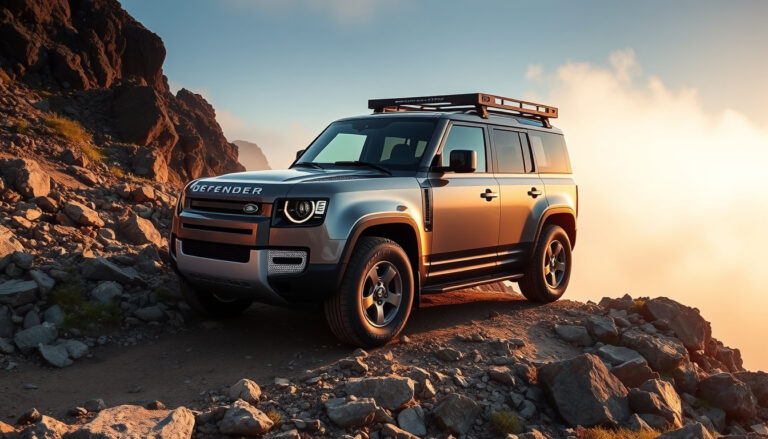 2024 Land Rover Defender – Specs, Pricing and Trims Guide
 PGLUCKY88.PRO Slot: Verified Data, Traffic & User Questions
 Martin Sheen Movies and TV Shows – Complete Filmography Guide
 BMI Calculator kg With Age: How to Calculate for Senior
