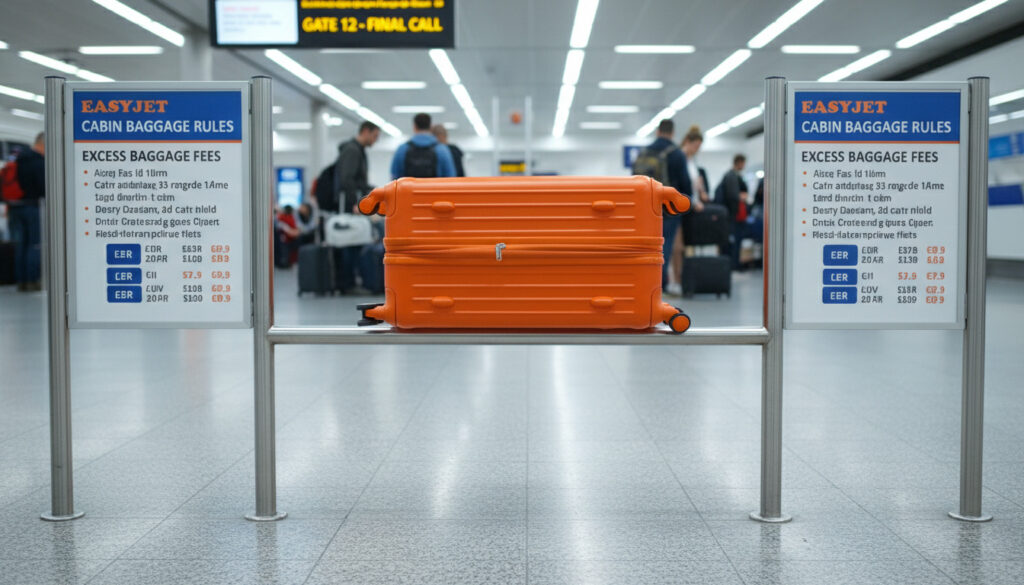
EasyJet Cabin Bag Size – Exact Limits, Rules and Fees
Navigating easyJet’s hand luggage restrictions requires precision. The airline operates a two-tier cabin bag system that distinguishes between free underseat storage and paid overhead locker access, with specific dimensional limits that exclude many standard carry-on suitcases.
Since 2021, easyJet has maintained strict enforcement protocols at boarding gates, using metal sizers to verify dimensions. Passengers arriving with non-compliant baggage face immediate fees ranging from £24 to £48, depending on the route and specific size violation.
Understanding the exact measurements—including wheels and handles—proves essential for avoiding these charges. The airline’s policy differentiates between a complimentary small bag measuring 45 x 36 x 20 centimetres and a larger 56 x 45 x 25 centimetre option available only through priority boarding, specific seat selections, or membership upgrades.
What Are the Official EasyJet Cabin Bag Size Limits?
45 x 36 x 20 cm
All passengers
56 x 45 x 25 cm
Priority only
Handles, wheels, side pockets
Must fit sizer
15kg maximum
Must lift unaided
- All passengers receive one free small bag fitting under the seat; overhead storage requires payment or status
- Dimensions include external features—wheels, handles, and pockets must fit within the stated limits
- The 56 x 45 x 25 cm large bag matches British Airways’ free allowance but requires fees on easyJet
- Recent policy shifts restrict large cabin bags to Up Front and Extra Legroom seat holders or Flexi fare customers
- No secondary handbag is permitted unless it fits entirely within the small cabin bag
- Infant passengers travelling on laps receive an additional 45 x 36 x 20 cm allowance
- Enforcement relies on physical sizers at gates; bags must fit unassisted
| Bag Type | Dimensions (cm) | Storage Location | Availability | Weight Guidance |
|---|---|---|---|---|
| Small Cabin Bag | 45 x 36 x 20 | Underseat | All passengers | 15kg max* |
| Large Cabin Bag | 56 x 45 x 25 | Overhead locker | Paid/Plus/Flexi/Up Front/Extra Legroom | 15kg max* |
| Infant Bag | 45 x 36 x 20 | Underseat | Lap-held infants only | 15kg max* |
*Weight limits indicate passengers must lift the bag unaided into overhead lockers; systematic weighing does not occur at boarding.
EasyJet Small vs Large Cabin Bag Allowances
The Complimentary Small Cabin Bag
Every easyJet passenger may bring one small cabin bag measuring exactly 45 x 36 x 20 centimetres. This item must fit beneath the seat in front, leaving overhead lockers reserved for paid priority customers. The dimensions include all external components—wheels, handles, and side pockets must not protrude beyond these limits. Sources indicate that bags meeting these specifications precisely typically pass gate checks without issue.
Accessing the Large Cabin Bag Option
The larger 56 x 45 x 25 centimetre allowance grants access to overhead locker space. This option requires purchasing an Up Front or Extra Legroom seat, selecting a Flexi fare, holding easyJet Plus membership, or buying a separate large cabin bag allowance. According to policy documentation, large bags are now restricted to these specific booking types, representing a tightening of access compared to previous years.
Recent Seat Restrictions for Overhead Storage
A significant policy evolution now ties large cabin bag privileges to specific seat categories. The airline’s TMC policy documentation confirms that standard seat passengers without priority status cannot bring the larger 56 x 45 x 25 cm bag, even with separate payment, unless upgrading to eligible seats or fare types.
Travelers consistently report success using soft-sided bags that compress slightly when placed in sizers. Rigid cases measuring exactly 45 cm in length often fail when wheels or handles extend beyond the frame, whereas fabric bags offer crucial millimetres of flexibility.
Does EasyJet Strictly Measure Cabin Bags?
Gate Enforcement Procedures
EasyJet maintains metal sizers at departure gates, and staff routinely require passengers to place bags inside these frames. The process involves verifying that the bag fits unassisted without compressing the frame. Multiple sources describe the airline as “quite strict,” with enforcement extending to bags whose wheels or handles create minor bulges beyond the dimensional limits.
Consequences of Non-Compliance
Passengers with oversized bags face mandatory fees charged at the gate. According to Skyscanner, bags measuring between the small and large limits incur charges starting at £24, while bags exceeding large cabin dimensions may cost £48 or more depending on the route. These charges significantly exceed pre-booking prices, which start from £5.99 when purchased online in advance.
Oversized bags detected at boarding gates trigger immediate fees ranging from £24 to £48. These charges apply even if the bag measures only centimetres beyond the 45 x 36 x 20 cm small bag limit, with no option to repack or check the bag without payment.
EasyJet Cabin Bag Weight Limits and Other Rules
Understanding Weight Restrictions
While easyJet officially lists a 15 kilogram maximum for both small and large cabin bags, enforcement focuses primarily on the passenger’s ability to lift the item unaided into the overhead locker or carry it to the gate. Official guidance indicates no systematic weighing occurs during standard boarding, though staff may intervene if a passenger clearly cannot manage their luggage.
Personal Items and Additional Handbags
The policy explicitly prohibits separate handbags, laptop bags, or duty-free items unless these fit entirely within the single permitted cabin bag. This restriction applies uniformly—passengers cannot carry a 45 x 36 x 20 cm roller bag plus a personal purse; the purse must fit inside the roller bag.
Backpacks as Cabin Luggage
Standard backpacks generally comply with the small cabin bag dimensions if under 45 x 36 x 20 cm. However, hiking or travel backpacks often exceed these limits when fully packed. Soft backpacks offer advantages over rigid cases, as they compress to fit sizers, though overstuffed bags risk rejection.
Although documentation specifies 15kg maximums, practical enforcement relies on passenger capability. However, consistently exceeding 15kg may result in staff intervention or requirements to check the bag into the hold.
How Has the EasyJet Baggage Policy Evolved?
- Pre-2021: Gradual tightening of enforcement begins with increased gate checks and size verification.
- 2021: Introduction of the small/large two-tier system, restricting free allowance to underseat bags only and removing free overhead access for standard fares.
- 2024-2026: Policy stability confirmed with no major dimensional changes to the established limits.
- Recent months: New restrictions linking large cabin bags specifically to Up Front, Extra Legroom, Flexi fare, or easyJet Plus status, removing the option for standard seat passengers to purchase overhead access independently.
What Is Definitively Established and What Remains Variable?
Established Facts
- Exact dimensions: 45 x 36 x 20 cm (small) and 56 x 45 x 25 cm (large)
- Fees: £24-£48 at gate for oversized bags; £5.99+ online
- Weight: 15kg stated maximum
- Enforcement: Sizers used at all departure gates
- Large bag access: Restricted to specific seats and fare types
Variable Elements
- Consistency of enforcement between different airports and individual staff members
- Exact threshold for weight intervention beyond the “lift unaided” rule
- Whether duty-free bags are strictly enforced as part of the allowance during busy flights
- Discretion applied to soft bags compressing slightly beyond rigid limits
How Does EasyJet Compare to Competitors?
EasyJet’s free 45 x 36 x 20 cm allowance exceeds Ryanair’s 40 x 30 x 20 cm restriction, offering more packing space without payment. However, British Airways provides two free bags—including a full-size 56 x 45 x 25 cm cabin bag—making easyJet’s paid model less generous for overhead storage. Unlike Ryanair’s reputation for rigid enforcement, easyJet’s sizer policies match similar strictness, though their free bag dimensions prove more accommodating than Ryanair’s compact limits.
Passengers comparing airlines should note that iPhone 12 Screen Size measurements offer a useful reference point for visualising the 45cm length limit, as the diagonal screen measurement helps conceptualise bag dimensions when measuring luggage at home.
What Do Official Sources and Industry Experts Report?
EasyJet is quite strict with their baggage sizers at the gate, often enforcing even slightly oversized bags where wheels push beyond the dimensional limits.
— Travel baggage analysis, Tripp
The most generous airline hand luggage allowances come from British Airways and Jet2, with easyJet’s underseat-only free bag proving less generous for passengers requiring overhead storage.
What Should Passengers Remember About EasyJet Cabin Bags?
Success with easyJet cabin luggage requires precise adherence to the 45 x 36 x 20 cm small bag limit or purchasing upgrades for the 56 x 45 x 25 cm option. The airline’s gate enforcement leaves no room for error—bags must fit sizers including wheels and handles. Pre-booking large cabin allowances costs significantly less than gate fees, and soft bags provide better compliance odds than rigid cases. Understanding these distinctions prevents costly surprises at departure gates. For precise measurement conversions when checking your luggage, reference How Many Teaspoons in a Tablespoon to ensure accuracy in your travel preparations.
Frequently Asked Questions
Can I take a 56x45x25 cm bag without paying extra?
No. This size requires an Up Front or Extra Legroom seat, Flexi fare, easyJet Plus membership, or paid large cabin bag allowance. Standard passengers must use the 45 x 36 x 20 cm limit.
Is the 45x36x20 cm limit strictly enforced?
Yes. EasyJet uses metal sizers at gates and routinely charges £24 for bags exceeding these dimensions, including wheels and handles.
Can I bring a handbag plus my small cabin bag?
No. Additional items must fit entirely inside your single permitted cabin bag. No separate personal items are allowed.
What happens if my bag is slightly too big?
You must pay gate fees starting at £24 or have the bag placed in the hold, potentially with additional charges.
Is there a weight limit for easyJet cabin bags?
The stated maximum is 15kg, though enforcement focuses on whether you can lift the bag unaided rather than systematic weighing.
Can I use a backpack as my cabin bag?
Yes, if it measures under 45 x 36 x 20 cm. Larger hiking backpacks require the large cabin bag allowance.
What are the easyJet bag sizer dimensions?
Gate sizers match the official limits: 45 x 36 x 20 cm for small bags and 56 x 45 x 25 cm for large bags.
How much are easyJet gate fees for oversized bags?
Fees range from £24 for small bags exceeding limits up to £48 or more for larger violations, depending on the route.
More related posts
 Idris Elba: Biography, Height, Children, and Bond Decision
 Is Swimming Good for Weight Loss? Benefits & Realistic Tips
 Dyson Cordless Vacuum 2025: Worth the Price
 How Many Teaspoons in a Tablespoon – US, UK and Global Standards
 Percy Jackson Lightning Thief: Book, Movie & Controversies
 How to Print Screen on Windows 10 & 11: Keyboard Shortcuts
 BMI Calculator kg With Age: How to Calculate for Senior
 Blood Clot in Period: What’ Normal and When to Worry
