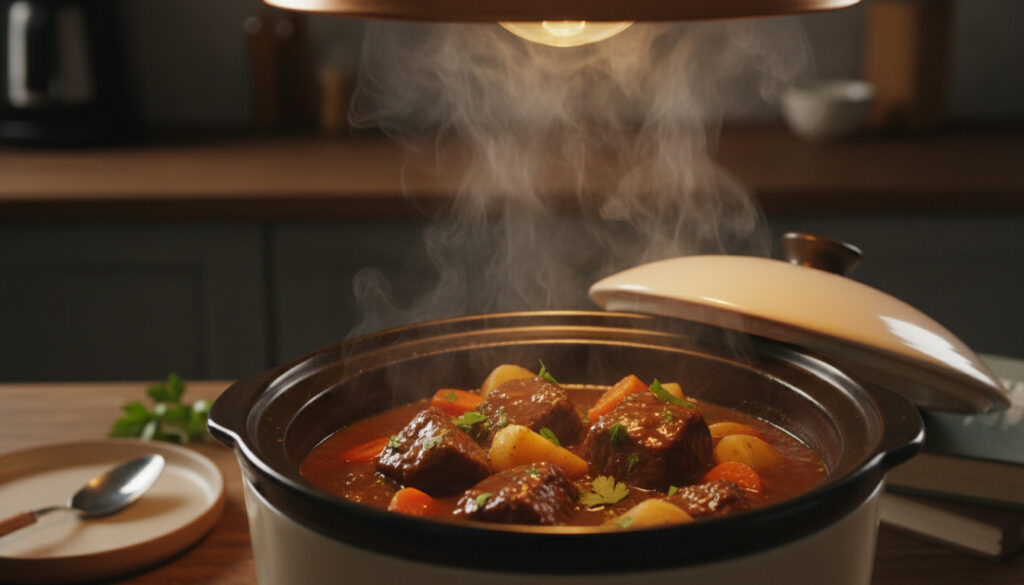
Beef Casserole Slow Cooker – Budget Recipe for Tender Beef
Slow cooker beef casserole represents the intersection of economy and comfort. This one-pot meal transforms inexpensive cuts of meat into tender, flavorful dinners that feed families without exhausting budgets or requiring constant attention.
The dish typically costs around £5 to prepare and serves between three and four people, making it a staple for meal planners seeking value. By combining beef with root vegetables and aromatic herbs, then allowing hours of gentle cooking, the method extracts maximum flavor from minimal ingredients.
Unlike oven braising, the slow cooker environment maintains steady moisture levels, preventing the dryness that often plagues leaner casseroles. The result is a rich, thick gravy surrounding meat that yields to the slightest pressure from a fork.
How Do You Make Beef Casserole in a Slow Cooker?
Success requires understanding the sequence of preparation and the interaction between ingredients during long cooking periods. The following insights guide optimal results:
- Brown beef before slow cooking for deeper flavor development
- Layer root vegetables at the bottom for even heat distribution
- Maintain low settings for optimal collagen breakdown
- Add thickening agents exactly one hour before serving
- Reserve dumplings for the final 30-60 minutes of cooking
- Season generously initially, as flavors mellow during cooking
The core ingredients follow a specific ratio that balances protein, vegetables, and liquid:
| Ingredient | Quantity | Notes |
|---|---|---|
| Casserole beef | 450g | Or 2 pounds for larger portions |
| Onions | 3 medium | Grate to stretch further |
| Carrots | 5 medium | Add halfway to prevent mushiness |
| Celery | 2 stalks | Provides aromatic base |
| Garlic | 3 cloves | Crushed or minced |
| Beef stock | 500ml | Bone broth adds richness |
| Cornflour | 30g | For thickening gravy |
| Thyme | 2-3 tbsp fresh | Or 1-2 tbsp dried |
| Worcestershire sauce | Splash | Adds umami depth |
| Brown sauce | Splash | Optional flavor enhancer |
What Is the Best Beef for Slow Cooker Casserole?
Preferred Cuts for Tender Results
Casserole beef or chuck roast stand as the preferred options for slow cooker preparations. These cuts, often among the cheapest available, contain sufficient connective tissue that breaks down during extended cooking, creating succulent texture and rich flavor.
Budget-Conscious Alternatives
For those seeking to reduce costs further, cube steak or minute steak serve as viable substitutes. While these require less cooking time traditionally, in a slow cooker they absorb flavors effectively and remain tender throughout the extended heat exposure.
Using Beef Mince in Casseroles
Ground beef or mince creates a different texture profile while significantly lowering the price point. The smaller particle size allows for faster flavor absorption, though the dish becomes more akin to a thick Bolognese than traditional chunks of braised meat.
Butchers often label chuck roast as “casserole beef” specifically for slow cooking methods. These inexpensive cuts deliver superior results compared to premium steaks when cooked for six to eight hours.
How Long to Cook Beef Casserole in Slow Cooker?
Low and Slow Method
The low setting requires five to six hours for complete cooking, though extending to eight or even ten hours produces equally tender results. This extended window makes the dish ideal for overnight preparation or workday cooking.
High Heat Alternative
When time constraints exist, the high setting delivers finished casserole in approximately four hours. Some cooks prefer starting with one hour on high before switching to low, accelerating the initial temperature rise without risking toughness.
Thickening the Gravy
One hour before serving, mix cornflour with water to create a fine paste, then stir into the pot. This final step transforms thin cooking liquid into the characteristic thick, glossy gravy that defines proper casserole consistency.
Slow cookers can safely maintain food at serving temperature for extended periods. Casserole beef remains tender and safe when cooked overnight or held on the “warm” setting after initial cooking completes.
What Vegetables Go in Beef Casserole Slow Cooker?
Root Vegetables That Hold Their Shape
Onions, carrots, parsnips, celery, turnips, and potatoes form the traditional vegetable base. These root vegetables withstand prolonged heat without disintegrating, while their starches naturally thicken the surrounding gravy.
Timing for Optimal Texture
Adding vegetables halfway through cooking—typically after three to four hours into a six to eight hour cycle—ensures they remain tender yet retain structural integrity. This prevents the mushy texture that results from eight hours of continuous submersion.
Dumplings as Hearty Additions
A traditional dumpling mixture requires 100 grams of plain flour, 50 grams of suet, and water sufficient to create a slightly sticky dough. This ratio produces approximately eight to ten substantial dumplings. Place them atop the casserole near the end of the cooking time, ensuring they sit above the liquid line to steam-cook properly without dissolving into the gravy. For detailed methods, see this guide to Slow Cooked Beef and Dumplings.
Delicate vegetables like peas or leafy greens should not be added during initial cooking. If included, stir them in during the final thirty minutes to preserve color and texture.
Step-by-Step Cooking Timeline
- Preparation (15 minutes): Chop vegetables, measure ingredients, and season beef generously with salt, pepper, and garlic herb seasoning.
- Searing (5-10 minutes): Brown the seasoned meat in a hot pan before transferring to the slow cooker to develop flavor depth.
- Initial Cook (1 hour on High): Begin cooking on high setting to rapidly raise internal temperature, then adjust as needed.
- Low Cooking (5-7 hours): Switch to low setting for gentle braising, or maintain high for 3 additional hours if time-constrained.
- Vegetable Addition (Hour 3-4): If seeking firmer vegetables, add them midway through the total cooking time.
- Thickening (1 hour before serving): Combine cornflour with water and stir into the pot to achieve proper gravy consistency.
- Dumpling Integration (Final 30-60 minutes): Add prepared dumplings to steam-cook above the liquid.
- Serving: Rest for five minutes, then ladle into bowls ensuring each portion includes meat, vegetables, gravy, and dumpling.
What We Know About Storage and Nutrition
| Established Information | Information Not Currently Available |
|---|---|
| Recipe costs approximately £5 for 3-4 servings | Specific calorie counts per serving |
| Cooking times: 4 hours (High) to 8-10 hours (Low) | Detailed macronutrient breakdown |
| Cornflour thickening method established | Freezing and storage procedures |
| Chuck roast and casserole beef confirmed as optimal cuts | Specific healthy variations or dietary adaptations |
| Dumpling ingredients and method verified | Jamie Oliver’s specific recipe details |
Why Slow Cooking Transforms Tough Cuts
The slow cooker operates as a braising environment, maintaining temperatures between 170-280°F (77-138°C) for extended periods. This sustained heat breaks down collagen—the tough connective tissue in inexpensive beef cuts—into gelatin, creating that characteristic mouthfeel associated with premium braises.
Unlike dry-heat methods that quickly toughen muscle fibers, moist heat cooking allows the meat’s internal temperature to rise slowly, preventing the contraction that squeezes out moisture. The sealed environment of modern slow cookers further prevents evaporation, concentrating flavors in the cooking liquid rather than losing them to the air.
Historically, casserole dishes emerged as peasant cuisine, utilizing the toughest, cheapest cuts available. The slow cooker modernizes this tradition, providing the same culinary chemistry without requiring oven supervision or expensive cookware, effectively democratizing technique-intensive braising.
Expert Sources and Culinary Methods
Brown the seasoned meat before adding to the slow cooker for better flavor development.
Adding them halfway through cooking ensures they remain tender without becoming mushy.
Alternatively, flour and water can be whisked together and stirred into the stew.
Additional authoritative resources include BBC Good Food, USDA Food Safety Guidelines, Nutritionix, and Slow Cooker Central.
Essential Points for Your Next Casserole
Success with slow cooker beef casserole requires selecting proper cuts like chuck roast, browning meat beforehand, and respecting the low-and-slow cooking philosophy. Whether topped with suet dumplings or served with crusty bread, this method consistently delivers restaurant-quality tenderness from budget ingredients, proving that time remains the most valuable ingredient in the kitchen.
Frequently Asked Questions
Can I freeze slow cooker beef casserole?
Specific freezing and storage procedures for this dish remain undocumented. Consult food safety guidelines for general casserole storage recommendations.
How many calories are in slow cooker beef casserole?
Detailed nutritional information and calorie counts per serving remain unavailable. Accurate calculations require specific ingredient brands and portion sizes.
Can you put raw beef in a slow cooker?
While technically possible, browning the seasoned meat before adding it to the slow cooker significantly improves flavor development and creates a better base for the gravy.
How do I thicken beef casserole without cornflour?
Standard flour whisked with water serves as an effective alternative to cornflour. Stir this mixture into the stew during the final hour of cooking.
Does Jamie Oliver have a slow cooker beef casserole recipe?
Specific details regarding Jamie Oliver’s approach remain unavailable. His official cookbooks or website provide authoritative versions of his recipes.
Can I use beef mince instead of chunks?
Yes, ground beef works as a budget-friendly alternative, though the texture differs significantly from traditional braised chunks. Reduce cooking time slightly to prevent dryness.
More related posts
 Adam Pearson: Neurofibromatosis and the Elephant Man Myth
 West Ham vs Man City: TV Channel, Prediction, Results
 Mackenzie Crook: Biography, Sister, Illness, and Detectorist
 Mufasa: The Lion King – Sleeper Hit Box Office, Plot & Cast
 Apple Watch Series 5 in 2025: Worth It or Time to Upgrade?
 Nikki Grahame: Cause of Death, Diagnosis, and Legacy
 Angus, Thongs and Perfect Snogging: Complete Movie Guide (2008)
 Liverpool Milos Kerkez Transfer News – Fee Agreed Medical Pending
